Dow-Led Earnings Support Meets a 4.6% Yield Test as US Stocks Attempt to Rebound
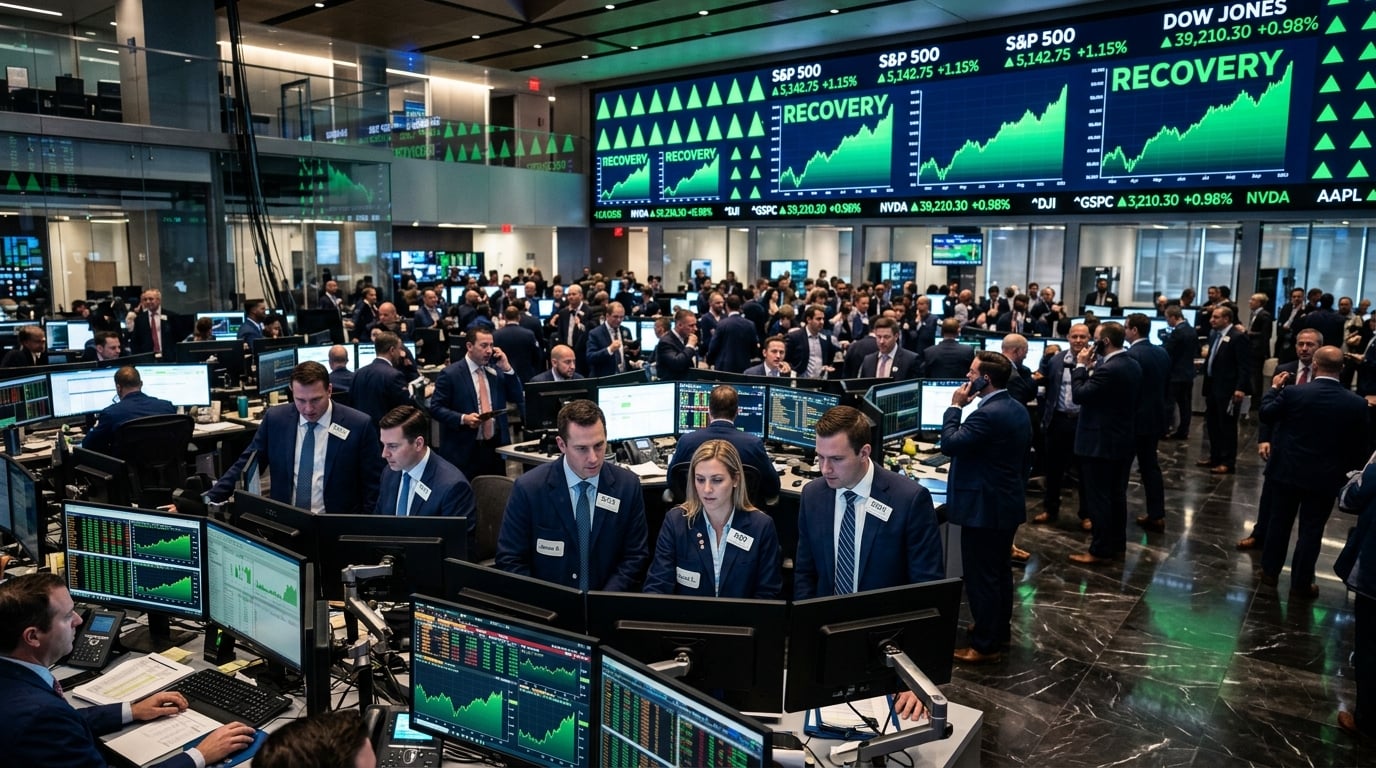
US equity markets entered July 21 in recovery mode, attempting to claw back losses from a broad selloff the previous session. The catalyst for cautious optimism was a combination of better-than-expected corporate earnings from industrial bellwethers and diplomatic signals suggesting Iran may be open to negotiations—a development that briefly eased geopolitical risk premiums embedded in oil prices. Yet the rebound faces a formidable structural headwind: the 10-year Treasury yield is testing 4.6%, a level that raises the discount rate for future earnings and limits the room for multiple expansion.
Earnings Deliver Where It Counts
General Motors and 3M provided the session's most concrete support. Both companies reported second-quarter results that exceeded analyst expectations and offered upbeat guidance for the remainder of 2026. The significance of these beats extends beyond their individual stock prices. GM's resilience signals that consumer demand for big-ticket purchases has not collapsed despite elevated borrowing costs, while 3M's diversified industrial exposure suggests that manufacturing activity remains constructive in key segments.
Approximately 15% of S&P 500 companies are scheduled to report during the current week, making the earnings calendar a live variable in the market's direction. Major financial institutions—JPMorgan Chase, Goldman Sachs, and Morgan Stanley—had already delivered strong second-quarter results in the prior week, establishing a positive baseline. The question now is whether that momentum extends to industrials, consumer discretionary, and technology names still on deck.
The Yield Hurdle Is Real
The 10-year Treasury yield stood at 4.55% as of July 17 and was described in intraday commentary as testing 4.6% on July 21. The 30-year yield has already crossed 5.06%. These are not abstract numbers. A 10-year yield near 4.6% means that the risk-free rate of return for long-duration capital is meaningfully competitive with equity earnings yields, particularly for growth stocks whose valuations depend heavily on discounted future cash flows.
The 2-year/10-year spread sits at approximately 37 basis points, indicating an upward-sloping curve. While this is conventionally interpreted as a positive growth signal, the current configuration reflects a different dynamic: short-term yields have eased modestly on softer labor data, while long-term yields remain elevated due to persistent inflation uncertainty and fiscal concerns. The result is a curve that is technically positive but operationally restrictive for equity valuations.
Geopolitical Relief: Provisional and Reversible
Reports that Iran may be willing to engage in diplomatic talks provided a sentiment boost, but the underlying risks remain unresolved. Strait of Hormuz shipping disruptions have contributed to Brent crude prices in the mid-to-high $80s—a significant increase from the low $70s observed in early July when tensions had briefly eased. Any reversal of diplomatic progress could quickly restore the geopolitical risk premium in energy markets, feeding back into inflation expectations and yield pressure.
This asymmetry is important for investors to understand. Geopolitical headlines can lift risk appetite rapidly, but the structural conditions that drove the July 20 selloff—elevated yields, oil-driven inflation risk, and earnings uncertainty—have not been resolved by a single diplomatic signal. The rebound is therefore best characterized as a relief rally rather than a fundamental re-rating.
Three Tests for the Rally's Durability
Investors should monitor three variables to assess whether the July 21 rebound has staying power. First, the quality of earnings guidance from companies reporting this week: delivered results matter, but forward guidance shapes the market's earnings trajectory assumptions. Second, the behavior of the 10-year yield around the 4.6% level—a decisive break higher would increase pressure on equity valuations, particularly in rate-sensitive sectors. Third, the evolution of Middle East diplomacy and its effect on Brent crude, which remains a key input into inflation expectations and consumer purchasing power.
The broader context is that roughly 85% of S&P 500 companies have yet to report for the quarter. The current earnings season is still in its early stages, and the aggregate picture will only become clear over the next several weeks. Industrial and financial sector strength provides a constructive starting point, but technology and consumer discretionary results will ultimately determine whether the earnings season can sustain a broader market recovery.
What This Means for Investors
The July 21 session illustrates a market navigating between two legitimate forces: tangible corporate earnings delivery and a rising discount-rate environment. When earnings quality is high—as demonstrated by GM and 3M—the market can absorb yield pressure in the short term. But the durability of any rally depends on whether the 10-year yield stabilizes, oil prices remain contained, and upcoming earnings reports maintain the positive tone set by early reporters.
Investors focused on sector allocation should note that the current environment favors companies with pricing power, strong free cash flow, and limited sensitivity to long-duration discount rates. Industrial and financial names have demonstrated these qualities in the current reporting cycle. Technology names with high capital expenditure and uncertain monetization timelines face a more demanding test as yields remain elevated.
This content is for informational purposes only and does not constitute financial advice. Always consult with a qualified financial advisor before making investment decisions.
Discussion