Gold's Correction to $4,038 Masks a Structural Floor: Central Bank Buying and the Silver Deficit
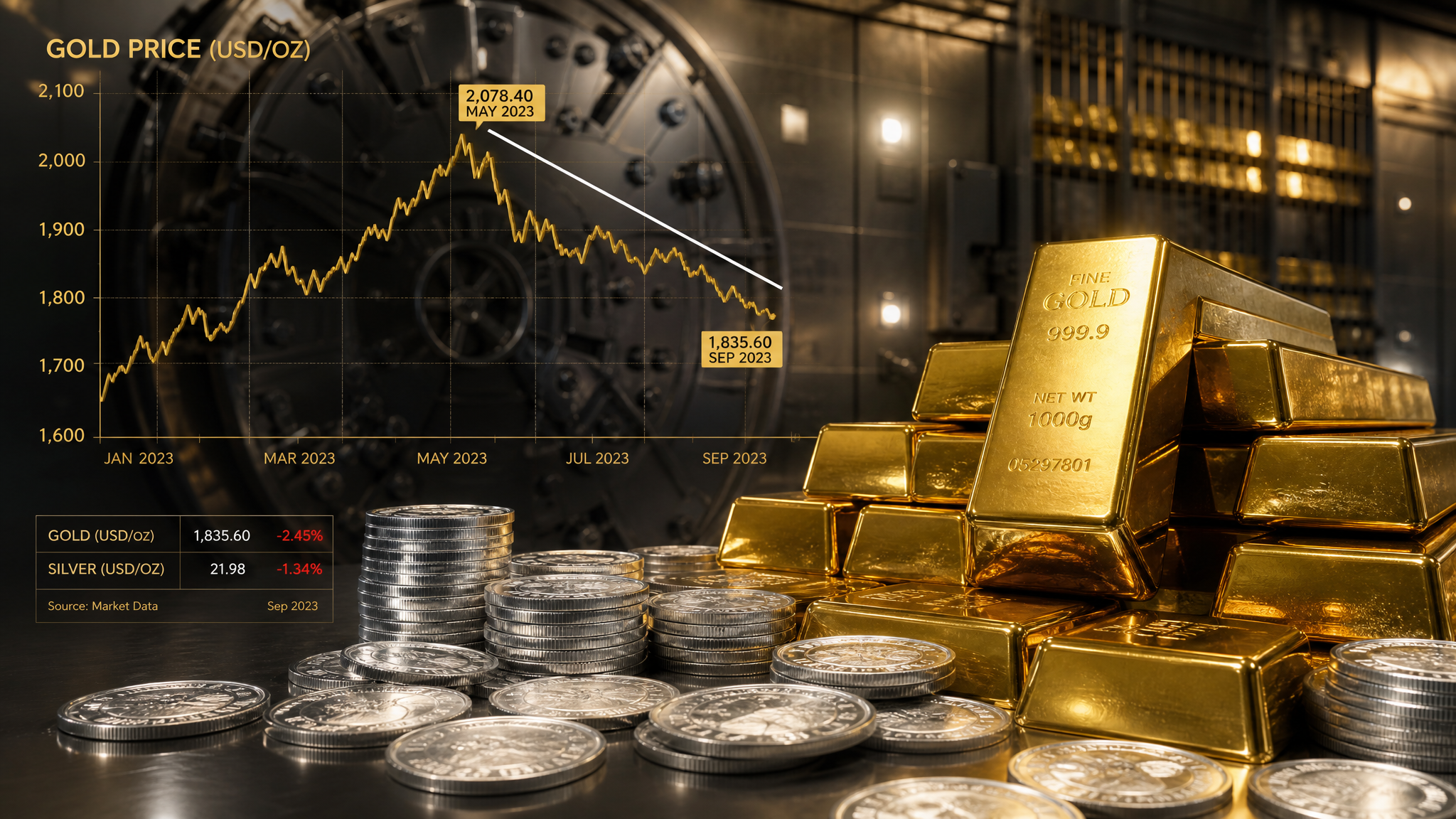
Gold's 28% correction from its January 2026 record high of $5,595 per ounce to the current level near $4,038 has prompted many investors to question whether the precious metals bull market is over. The answer, according to the structural dynamics of the market, is almost certainly no. Beneath the surface of the price correction lies a powerful and growing structural floor: persistent, accelerating central bank buying that is fundamentally altering the demand landscape for gold. Meanwhile, silver is navigating its own unique story, driven by a physical deficit that has nothing to do with safe-haven sentiment and everything to do with the industrial demands of the green energy transition.
Why Gold Has Corrected: The Real-Yield Mechanism
Understanding gold's correction requires understanding the "real-yield" mechanism that is the primary driver of the metal's price in the current environment. Gold is a non-yielding asset — it pays no interest or dividend. When real interest rates (nominal rates minus inflation) rise, the opportunity cost of holding gold increases, making yield-bearing assets like Treasury bonds more attractive by comparison. This is precisely what has happened in mid-2026.
Elevated energy inflation, fueled by the U.S.-Iran conflict and the disruption to the Strait of Hormuz, has kept Federal Reserve rate-hike expectations alive. The Fed's maintenance of a higher interest rate band of 3.50%–3.75% means that U.S. Treasury bonds offer a meaningful real yield, creating a genuine alternative to gold for investors seeking a store of value. This dynamic has been the primary driver of gold's correction from its January peak, as investors who bought gold as an inflation hedge have partially rotated into higher-yielding alternatives.
The Structural Floor: Central Bank Buying at Record Pace
Despite the price correction, the structural demand picture for gold has never been stronger. The People's Bank of China extended its gold purchasing streak to 20 consecutive months in June 2026, adding nearly 15 tonnes to its reserves. This is not an isolated phenomenon. A World Gold Council survey reveals that an overwhelming 95% of central banks globally expect to increase their gold holdings in 2026, viewing the metal as a critical tool for reserve diversification and a hedge against geopolitical risk and U.S. dollar dominance.
This central bank buying represents a qualitative shift in the gold market. Unlike speculative investors who buy and sell based on price momentum, central banks are long-term, price-insensitive buyers who are accumulating gold as a strategic reserve asset. Their buying provides a structural floor under the gold price that limits the downside even during periods of cyclical pressure from rising real yields. The trend is driven by a broader de-dollarization impulse among emerging market central banks, who are seeking to reduce their dependence on U.S. dollar-denominated assets in the wake of the weaponization of dollar-based financial systems through sanctions.
Major Bank Targets: Bullish Despite Near-Term Headwinds
Major financial institutions have maintained their long-term bullish outlook on gold, even as they have revised down their near-term price targets to reflect the current correction. Goldman Sachs has revised its year-end 2026 gold price target to $4,900 per ounce, while JPMorgan has set a target of $4,500. Both banks cite the structural central bank buying trend as the primary reason for their continued bullishness, arguing that this demand is sufficient to absorb the cyclical headwinds from higher real yields and eventually drive prices to new highs.
The key catalyst for a gold price recovery, according to these analysts, would be a shift in Federal Reserve policy toward rate cuts, which would reduce real yields and remove the primary headwind for the metal. Any escalation in geopolitical tensions that triggers a broader flight to safety could also provide a near-term boost. The current correction, in this view, represents a buying opportunity for long-term investors rather than a structural bear market.
Silver: The Industrial Deficit Story
Silver has mirrored gold's volatility, often acting as a higher-beta version of the yellow metal. However, silver's fundamental story is uniquely compelling and distinct from gold's. The metal is experiencing a structural physical deficit driven by surging industrial demand that is clashing with a constrained supply. Silver's use in solar panels, electric vehicles, and electronics is growing rapidly as the global green energy transition accelerates, creating a demand profile that is largely independent of investment sentiment.
This industrial demand surge is leading to inventory drawdowns in major commodity hubs including London and Shanghai. The physical deficit — where demand exceeds mine supply — has been a persistent feature of the silver market for several years and is expected to deepen as solar panel installations and EV production continue to grow. This structural supply-demand imbalance positions silver to potentially outperform gold should industrial activity accelerate or investment demand return to the precious metals complex.
Industrial Metals: Copper's Resilience vs. Iron Ore's Weakness
The broader metals complex presents a more mixed picture. Copper has shown considerable resilience, trading near multi-month highs, supported by long-term structural demand from AI data center construction and the global green energy transition. The supply side remains tight, with ongoing risks of production disruptions at major mines in South America and Africa. In contrast, iron ore faces a more bearish outlook, with prices projected to continue a downward trend as the persistent weakness in China's property sector dampens demand for steel. Aluminum prices are expected to firm up, benefiting from a production cap in China and growing demand outside the country, which is tightening the global market balance.
For investors in the precious and industrial metals space, the current environment requires a nuanced, metal-by-metal approach. Gold's structural floor from central bank buying makes it a compelling long-term hold despite the near-term correction. Silver's industrial deficit story offers a potentially higher-return opportunity for investors with a longer time horizon. Copper's green energy tailwinds provide a compelling structural investment case, while iron ore's China property exposure warrants caution.
This content is for informational purposes only and does not constitute financial advice. Always consult with a qualified financial advisor before making investment decisions.