Hormuz Premium: How the Strait's Blockade Flipped Brent Into Backwardation and Sent EU Gas to €58.91
The global energy market underwent a fundamental structural shift in mid-July 2026 that goes far beyond a simple price spike. The collapse of a temporary U.S.-Iran ceasefire and the subsequent reimposition of a naval blockade on Iranian oil exports has done something that geopolitical events rarely achieve: it has changed the shape of the Brent crude futures curve. The market has flipped decisively into backwardation — a state where near-term prices are higher than future prices — signaling acute, immediate fears about physical supply availability. This is the "Hormuz Premium," and it is reshaping energy markets, European gas storage economics, and the inflation outlook across the EMEA region.
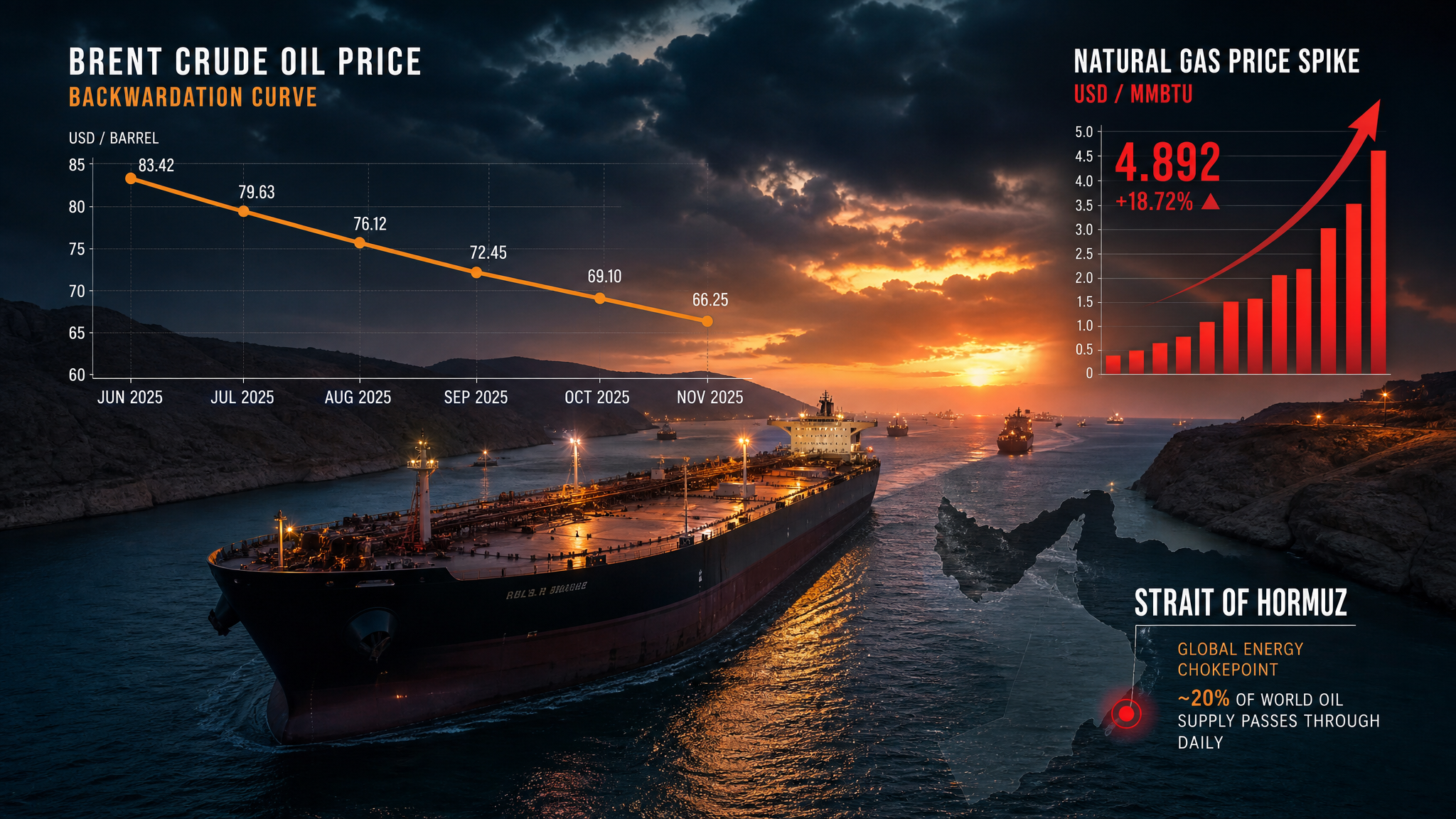
Backwardation: The Market's Distress Signal
The shift from contango to backwardation in the Brent crude futures curve is one of the most significant structural signals in commodity markets. In contango, future prices are higher than spot prices, reflecting the cost of storage and suggesting that the market is well-supplied. In backwardation, the opposite is true: the market is willing to pay a premium for immediate delivery, signaling that physical barrels are scarce right now. This is precisely the signal that the Brent market is sending in mid-July 2026.
The trigger was the collapse of the fragile U.S.-Iran memorandum of understanding that had briefly eased tensions in the Strait of Hormuz. Following renewed military engagements in July, including Iranian-linked attacks on tankers, the U.S. reinstated a naval blockade on Iranian oil exports. This effectively tightened the physical market and sent a ripple of insecurity through global trade flows. Although Brent prices had softened in late June, with WTI briefly dipping below $70 per barrel when diplomatic efforts appeared promising, the mid-July escalation triggered a sharp rebound. By July 15, Brent futures for near-term delivery were trading at a significant premium to contracts for delivery six months later — the textbook definition of backwardation.
The Strait of Hormuz: 20% of Global Oil and LNG Trade
The Strait of Hormuz is the world's most critical energy chokepoint, through which approximately 20% of global oil and LNG trade passes. The effective closure of this waterway by Iran since late February, enforced through naval mines and attacks on commercial vessels, has been described by the International Energy Agency as the largest supply disruption in the history of the global oil market. Hundreds of ships and thousands of mariners have been trapped, bringing tanker traffic to a near-standstill and forcing a fundamental repricing of energy risk.
The OPEC+ landscape has been further complicated by the United Arab Emirates' formal exit from the cartel, effective May 1, 2026. The UAE, frustrated with production quotas that constrained its capacity, is now pursuing a policy of maximum production, with its output reportedly nearing record levels. While the remaining OPEC+ members, led by Saudi Arabia, agreed to a modest output increase of 188,000 barrels per day for August, these planned adjustments are overshadowed by the physical reality of the Hormuz blockade. Analysts note that OPEC+ quotas have become partially detached from the market's physical constraints, where actual supply is dictated by the ability of tankers to safely navigate the Gulf.
European Natural Gas: A 45% Surge to €58.91/MWh
The impact on European natural gas markets has been particularly severe. EU natural gas prices surged to approximately €58.91 per megawatt-hour in mid-July, a rise of over 45% in a single month. This price spike is a direct result of the disruption to LNG flows from major producers like Qatar, which has faced operational challenges due to the conflict. With Europe heavily reliant on global LNG to replenish its inventories ahead of winter, the continent has been forced into costly competition with Asian buyers for limited flexible cargoes.
The storage situation is alarming. European gas storage was only about 49% full at the end of June, well below the levels needed to comfortably meet winter demand. Energy regulators have warned that reaching the 90% winter target will be extremely difficult and expensive, further underscoring the region's vulnerability to the ongoing Middle East supply crisis. The surge in gas prices is feeding directly into European inflation, complicating the ECB's monetary policy calculus and squeezing household budgets across the continent.
Implications for European Industry and Inflation
The energy price shock is having cascading effects across the European economy. Energy-intensive industries — including chemicals, steel, aluminum, and glass manufacturing — are facing severe margin compression. Some facilities have already announced temporary production curtailments, echoing the energy crisis of 2022. The automotive sector, already under pressure from the transition to electric vehicles and weak consumer demand, faces additional headwinds from higher energy costs in its manufacturing processes.
For the ECB, the energy price surge represents a significant upside risk to its inflation projections. The central bank's June staff projections already assumed a higher path for energy prices, but the mid-July escalation in the Strait of Hormuz has pushed actual prices well above those assumptions. This creates a genuine dilemma: the ECB may be forced to consider further rate hikes to prevent energy-driven inflation from becoming entrenched, even as the growth outlook deteriorates.
Investment Implications: Winners and Losers
The energy market disruption creates clear winners and losers across the investment landscape. European integrated energy companies — Shell, BP, TotalEnergies, and Equinor — are benefiting from elevated oil and gas prices, with their upstream production assets generating exceptional cash flows. LNG infrastructure operators and shipping companies with exposure to tanker rates are also seeing significant earnings tailwinds. Conversely, energy-intensive manufacturers, airlines, and consumer discretionary companies face significant headwinds from higher input costs.
For fixed income investors, the energy-driven inflation spike is a key risk factor for European sovereign bonds, particularly in countries with high energy import dependence. The spread between energy-importing and energy-exporting economies within the euro area is likely to widen, creating potential opportunities for relative value trades. The Hormuz Premium is not just an energy market story — it is a macro story that is reshaping the investment landscape across the entire EMEA region.
This content is for informational purposes only and does not constitute financial advice. Always consult with a qualified financial advisor before making investment decisions.