Economic Data Watch: What Today's Housing, Production, and Sentiment Reports Reveal
On July 17, key economic indicators on housing, industrial output, and consumer sentiment will provide a crucial health check for the U.S. economy amidst inflation fears and market volatility. Today's packed economic calendar offers investors and policymakers a comprehensive snapshot of where the American economy stands heading into the second half of 2026.
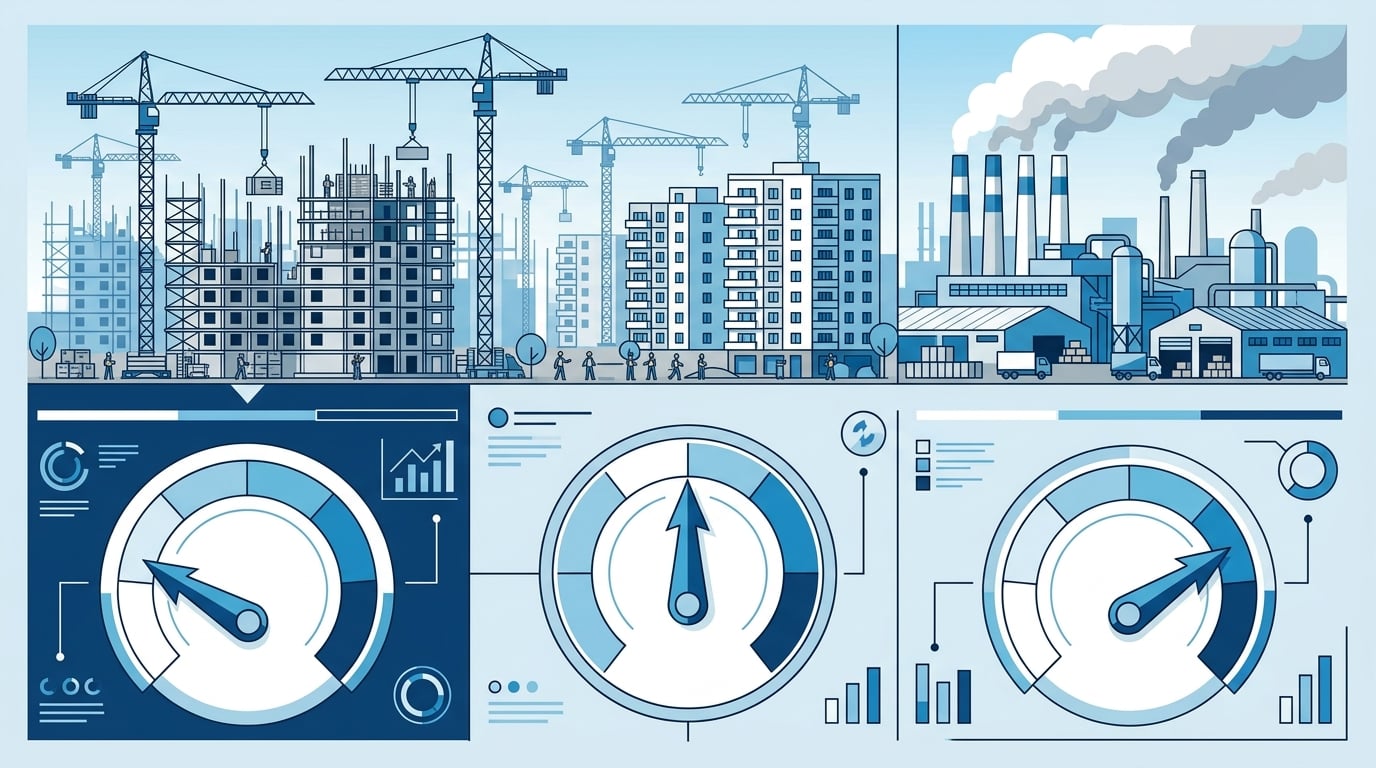
A Critical Day for U.S. Economic Data
Economic data releases are the lifeblood of financial markets. They provide the raw material that central bankers use to calibrate monetary policy, that investors use to price assets, and that businesses use to make capital allocation decisions. Today's schedule is particularly rich, covering four distinct areas of the economy in a single morning.
Today's Schedule of Key Releases
The economic calendar for Friday, July 17, 2026 is front-loaded with important data. At 8:30 AM ET, the Bureau of Labor Statistics releases U.S. Import and Export Price Indices for June, followed immediately by the New Residential Construction data covering Housing Starts and Building Permits. At 9:15 AM ET, the Federal Reserve releases Industrial Production and Capacity Utilization figures for June. The morning concludes at 10:00 AM ET with the preliminary University of Michigan Consumer Sentiment Index for July, alongside the St. Louis Fed Economic News Index. The New York Fed Staff Nowcast follows at 12:45 PM ET.
Taking the Temperature of Inflation
The Import and Export Price Indices are often overlooked by casual market observers, but they are closely watched by economists and Fed officials as leading indicators of future consumer price inflation.
What to Watch for in Import/Export Price Data
Import prices reflect the cost of goods coming into the United States from abroad. When import prices rise, those costs are often eventually passed on to consumers, contributing to broader inflation. In the current environment, with geopolitical tensions pushing up energy prices, the import price data will be scrutinized for signs of imported inflation. Export prices, meanwhile, provide insight into the competitiveness of U.S. goods in global markets and can signal shifts in trade dynamics. A stronger U.S. dollar, which has been a feature of 2026, typically puts downward pressure on export prices by making American goods more expensive for foreign buyers.
The Housing Market Under the Microscope
The housing market is one of the most interest rate-sensitive sectors of the U.S. economy, making today's New Residential Construction data particularly significant in the context of the Fed's higher-for-longer rate stance.
Decoding June's Housing Starts and Building Permits
Housing Starts measure the number of new residential construction projects that began during the month, while Building Permits are a forward-looking indicator of future construction activity. Together, they provide a comprehensive picture of the health of the residential real estate market. Elevated mortgage rates — a direct consequence of the Fed's tightening cycle — have weighed heavily on housing affordability and demand. Any signs of further weakness in housing starts could reinforce concerns about the broader economic impact of restrictive monetary policy. Conversely, resilience in the housing data would suggest that the economy is absorbing higher rates better than feared.
Gauging America's Industrial Might
The Industrial Production and Capacity Utilization report from the Federal Reserve provides a real-time gauge of the manufacturing sector's health, which has been under pressure from both higher borrowing costs and slowing global demand.
Industrial Production and Capacity Utilization Insights
Industrial Production measures the output of the manufacturing, mining, and utilities sectors. Capacity Utilization, expressed as a percentage, indicates how much of the economy's productive capacity is being used. A high capacity utilization rate can signal inflationary pressure, as businesses operating near full capacity may raise prices. A declining rate, on the other hand, suggests slack in the economy and reduced inflationary pressure. In the current environment, where the Fed is trying to cool inflation without triggering a recession, these figures are critical inputs for the policy debate.
The Consumer's Pulse
Consumer spending accounts for approximately 70% of U.S. GDP, making consumer sentiment one of the most important leading indicators for the overall economy.
First Look: University of Michigan Consumer Sentiment
The preliminary University of Michigan Consumer Sentiment Index for July will be the first major read on how American consumers are feeling about the economy this month. The index captures consumers' assessments of their personal financial situation, their views on current economic conditions, and their expectations for the future. In an environment of stock market volatility, geopolitical uncertainty, and persistent inflation concerns, consumer confidence can be fragile. A significant drop in sentiment could signal reduced consumer spending ahead, with implications for corporate earnings and economic growth. Today's data will be a key input for the Fed's assessment of economic conditions ahead of its July 28-29 meeting.
This content is for informational purposes only and does not constitute financial advice. Always consult with a qualified financial advisor before making investment decisions.
Discussion