Nasdaq Drops 1.4% as Semiconductor Rout and VIX Spike Signal Shifting Market Sentiment
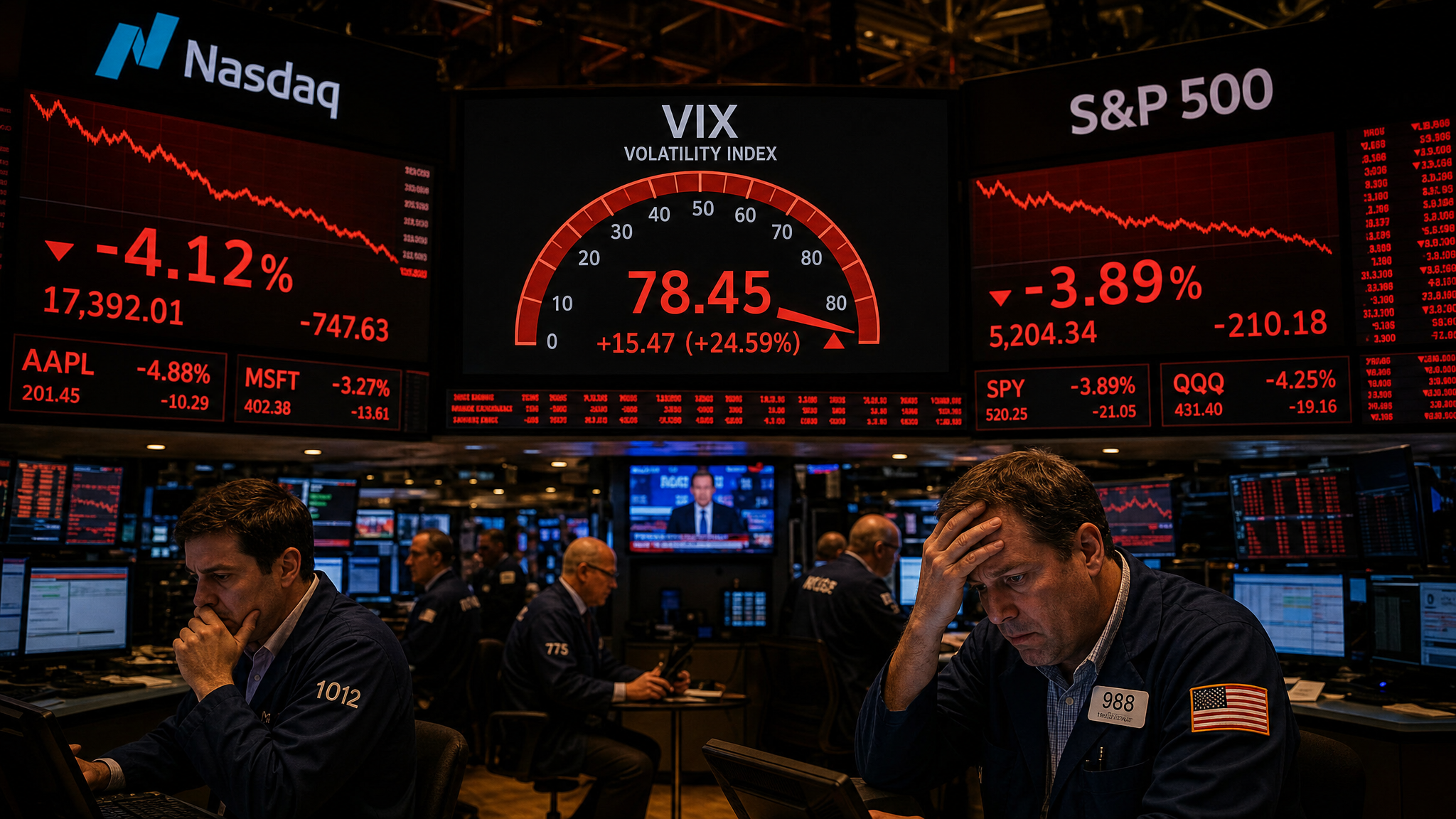
US equity markets closed sharply lower on Friday, July 18, 2026, capping a turbulent week with a broad-based sell-off that hit technology stocks hardest. The Nasdaq Composite led the retreat, falling 1.4% to close at 25,520.24, while the S&P 500 shed 1.01% to end at 7,457.69. The Dow Jones Industrial Average declined 0.77%, settling at 52,146.42. For the week, the Nasdaq was the worst performer, sliding 2.9%, followed by the S&P 500 with a 1.6% loss and the Dow with a 0.9% decline — snapping multi-week winning streaks for all three major indices.
Semiconductors at the Epicenter of the Sell-Off
The primary catalyst for Friday's decline was a dramatic rout in semiconductor and artificial intelligence-related stocks. The VanEck Semiconductor ETF (SMH) fell more than 4% on the session alone and has now declined over 17% in July — a staggering reversal for a sector that had been the market's primary engine of gains in the first half of 2026. The selling pressure was amplified by reports that Chinese AI startup Moonshot AI had developed a large language model rivaling top US offerings, reigniting investor fears about the competitive durability of American AI dominance and the sustainability of the massive capital expenditure cycle underpinning chip demand.
The fallout was swift and visible at the top of the market cap rankings. Apple surpassed Nvidia to reclaim the title of the most valuable US company as Nvidia's shares retreated sharply. This symbolic shift underscored how quickly sentiment can reverse in a market where a handful of mega-cap technology names account for a disproportionate share of index weighting and investor attention.
VIX Surges as Fear Returns to Wall Street
The Cboe Volatility Index (VIX), widely known as Wall Street's "fear gauge," surged 12.19% on Friday to close at 18.77 — its highest level of the week. While a reading below 20 is generally considered within a normal range, the speed and magnitude of the move signals a meaningful shift in investor psychology. Options traders rushed to buy protective puts, and the Cboe Equity Put/Call Ratio spiked to elevated levels, reaching 1.66 on July 14 before closing the week at 1.47. Readings consistently above 1.0 indicate that bearish hedging activity is outpacing bullish speculation — a classic sign of institutional caution.
Technical analysts noted that the NYSE McClellan Advance/Decline Oscillator had been hovering near the zero level for an unusually extended period prior to this week's decline, a condition often interpreted as a "topping" signal. The lack of broad market participation — with gains concentrated in a narrow band of technology names — left the market structurally vulnerable to the kind of sharp, targeted pullback that materialized this week.
Sector Rotation: Energy Gains as Tech Bleeds
Not all sectors suffered equally. Energy stocks were among the few gainers on Friday, bolstered by a surge in crude oil prices amid renewed US-Iran tensions. WTI crude futures settled at $82.49 per barrel, providing a tailwind for energy companies even as the broader market declined. Some defensive-oriented names also showed relative resilience, with The Travelers Companies standing out as a notable bright spot — its shares soared over 8% after the insurer delivered a strong earnings report that beat Wall Street estimates across key metrics.
On the downside, Netflix shares fell more than 7% after the streaming giant's third-quarter guidance disappointed investors who had expected stronger subscriber growth momentum. The reaction highlighted the elevated bar that high-multiple growth stocks must clear to justify their valuations in the current environment.
What Comes Next: Earnings Season and Fed Decision in Focus
Looking ahead, markets face a packed calendar that will test whether this week's sell-off represents a healthy consolidation or the beginning of a more sustained correction. The Federal Reserve's July 29 FOMC meeting looms large, with CME FedWatch data showing an 86.7% probability of a rate hold. Earnings season will also intensify, with major technology and financial companies set to report results that will either validate or challenge current valuations.
For investors, the key question is whether the semiconductor sector's July decline — now exceeding 17% for the SMH ETF — has adequately priced in the risks of AI competition, regulatory headwinds, and slowing demand growth, or whether further downside lies ahead. The answer will likely depend on the quality of guidance from chipmakers and hyperscalers in the weeks to come.
Key Market Levels to Watch
- S&P 500: 7,457.69 (weekly loss: -1.6%)
- Nasdaq Composite: 25,520.24 (weekly loss: -2.9%)
- Dow Jones: 52,146.42 (weekly loss: -0.9%)
- VIX: 18.77 (+12.19% on Friday)
- SMH (Semiconductor ETF): -17% in July
- WTI Crude: $82.49/barrel
The week's events serve as a reminder that even in a structurally bullish market environment, concentration risk and crowded positioning can create sharp, painful reversals. Diversification and active risk management have rarely been more important for navigating the current landscape.
This content is for informational purposes only and does not constitute financial advice. Always consult with a qualified financial advisor before making investment decisions.