Fed's Strategic Overhaul: Five Task Forces, a Balance Sheet Review, and Shifting Rate Hike Odds
The Federal Reserve is undergoing its most significant institutional self-examination in years. Under the leadership of Chairman Kevin Warsh, the central bank has launched five independent task forces to conduct a sweeping review of its core practices — from the way it communicates policy to the fundamental frameworks it uses to understand inflation. This initiative, announced in July 2026, signals that the Fed is not merely managing the current economic cycle but actively questioning whether its operating model is fit for a new era defined by artificial intelligence, persistent supply-side shocks, and a structurally different inflation landscape.
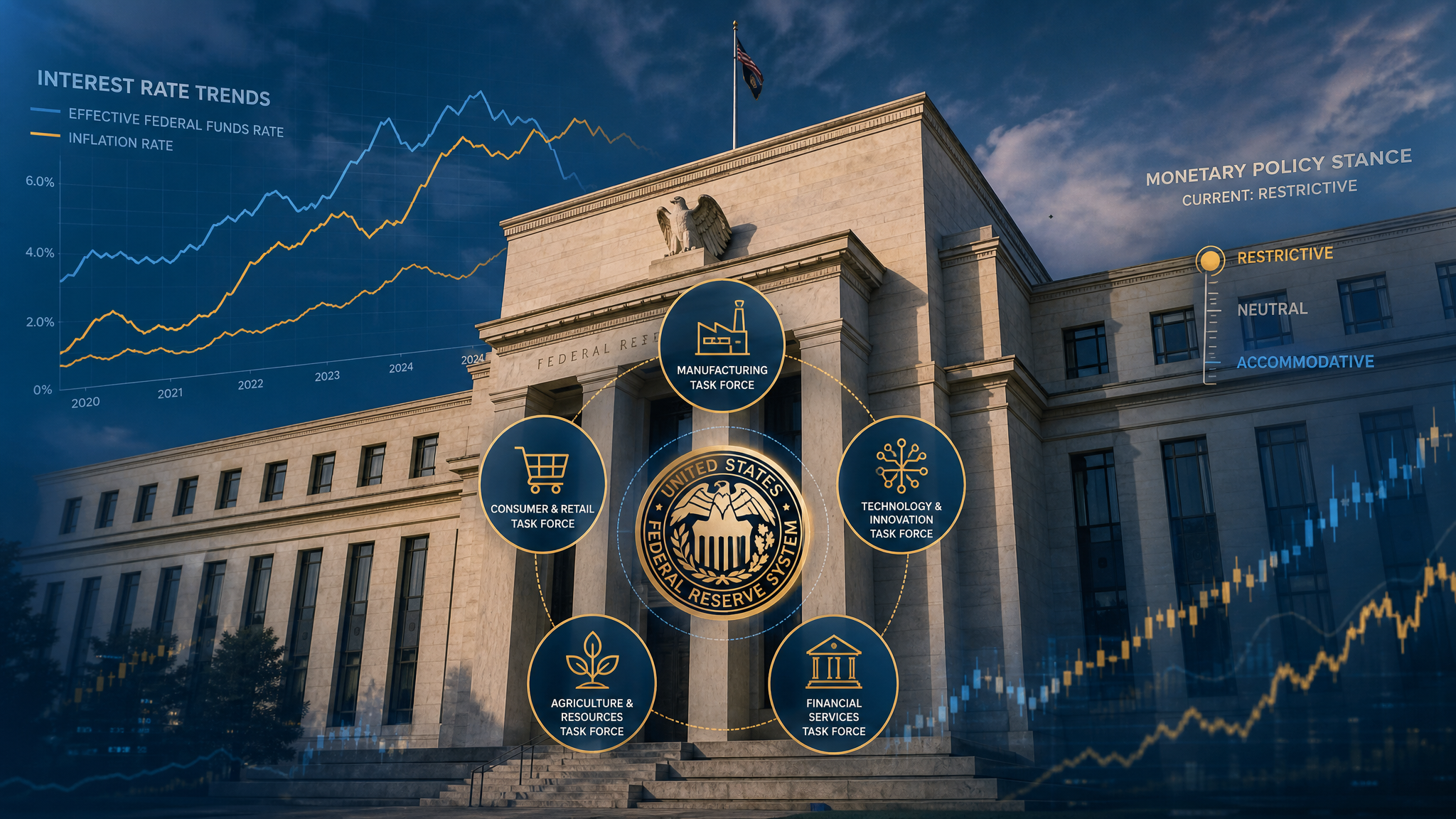
Five Task Forces, One Strategic Vision
The five working groups established by Chairman Warsh will scrutinize distinct but interconnected areas of Fed operations. The first will examine the effectiveness of the central bank's communications strategy — a perennial source of market volatility when guidance is perceived as unclear or inconsistent. The second will review the "ample-reserves" balance sheet regime that has governed the Fed's operations since the conclusion of its quantitative tightening program on December 1, 2025. The third will assess the quality and timeliness of the economic data the Fed relies upon for policymaking decisions. The fourth will explore the macroeconomic impact of general-purpose technologies, particularly artificial intelligence, on productivity, inflation, and the labor market. The fifth will undertake a fundamental review of the frameworks the Fed uses to model and forecast inflation.
This comprehensive review reflects a recognition that the post-pandemic economic environment has exposed limitations in traditional monetary policy models. The Fed's repeated underestimation of inflation's persistence in 2021 and 2022, followed by its aggressive tightening cycle, left lasting questions about the reliability of its analytical tools. Warsh's initiative is an attempt to institutionalize the lessons learned and build a more adaptive, credible central bank for the decade ahead.
The Balance Sheet: Ample Reserves and Reserve Management Purchases
One of the most technically significant areas under review is the Fed's balance sheet framework. Following the end of its quantitative tightening program, the FOMC is now operating under an "ample-reserves" regime, reinvesting principal payments from its existing holdings to maintain the size of its balance sheet. Reserve balances stood at approximately $3.1 trillion in July 2026 — a level the Fed considers sufficient to ensure smooth functioning of money markets.
To fine-tune reserve levels, the Fed has been conducting Reserve Management Purchases (RMPs) of shorter-term Treasury securities. These technical operations are distinct from the large-scale asset purchases associated with quantitative easing and are designed to prevent reserve balances from falling below the "ample" threshold. The task force reviewing the balance sheet regime will assess whether this framework remains optimal as the economy evolves and whether the current level of reserves is appropriately calibrated.
Rate Hike Odds: A Volatile but Ultimately Patient Market
Against this backdrop of institutional introspection, market-implied expectations for the Fed's next policy move have been notably volatile. Earlier in July, rising oil prices — driven by renewed Middle East tensions — pushed the implied probability of a rate hike at the July 29 FOMC meeting as high as 46.5%. However, a weaker-than-expected non-farm payrolls report for June, which showed only 57,000 jobs created, sharply reversed those expectations.
As of July 18, the CME FedWatch Tool shows an 86.7% probability of a rate hold at the July 29 meeting, with only a 13.3% chance of a hike. The federal funds rate currently sits in a target range of 3.50% to 3.75%, unchanged since the June 16-17 FOMC meeting. Looking further out, futures markets assign a 43.0% probability that the policy rate will be 25 basis points higher by the December 9 meeting, indicating that while an immediate move is off the table, the risk of further tightening remains a live consideration for investors.
Inflation Remains the Central Concern
Fed Governors Christopher Waller and Lisa Cook have been consistent in their messaging: inflation remains the primary focus of monetary policy. In a July 15 speech, Governor Cook noted that headline inflation was running at 3.7% as of June — higher than anticipated — and stated that the balance of risks had shifted toward the Fed's price stability mandate. Officials have identified three key drivers of persistent inflation: the lingering effects of 2025 tariffs, energy price shocks from Middle East conflict, and robust demand for AI-related infrastructure, which has created localized price pressures in construction, energy, and specialized labor markets.
The combination of a strategic institutional review, a data-dependent rate path, and persistent inflation above target creates a complex environment for investors. The Fed's willingness to question its own frameworks is ultimately a sign of institutional maturity — but in the short term, it adds a layer of uncertainty to an already challenging market landscape. Investors would do well to monitor the output of Warsh's task forces closely, as their conclusions could reshape the Fed's communication style, balance sheet strategy, and inflation-fighting toolkit for years to come.
This content is for informational purposes only and does not constitute financial advice. Always consult with a qualified financial advisor before making investment decisions.