Tech Tremors: Semiconductor Sell-Off Sinks Nasdaq as AI Rally Doubts Grow
U.S. stock markets tumbled on July 17 as a sharp sell-off in semiconductor stocks and a drop in Alphabet shares rattled investor confidence in the ongoing AI-driven rally. The Nasdaq Composite bore the brunt of the losses, sliding nearly 2% in a session that exposed the fragility beneath the surface of this year's technology-led bull market.
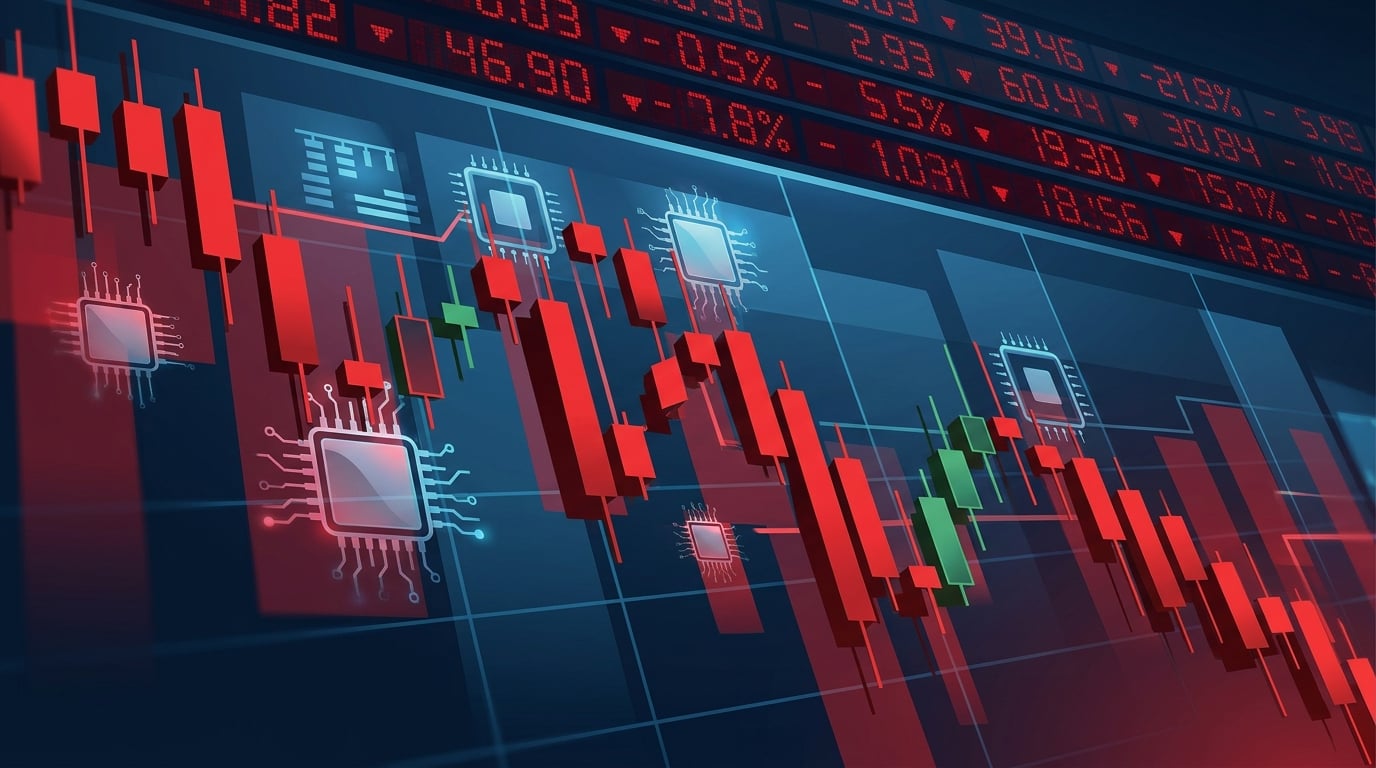
U.S. Markets Tumble on Tech Weakness
Friday's session was a stark reminder that the stock market rally of 2026 has been built on a narrow foundation. When the pillars of that foundation — semiconductor stocks and mega-cap AI names — wobble, the entire structure feels the tremors.
Friday's Closing Bell Numbers
The numbers told a sobering story. The S&P 500 declined 0.86% to close at 7,469 points, while the Dow Jones Industrial Average dropped 0.66% to 52,204. The Nasdaq Composite, home to the largest concentration of technology and AI-related stocks, slid 1.90% to 28,474 — the worst performer among the major indices.
Year-to-Date Context
Despite Friday's losses, the major indices remain in positive territory for the year. However, the concentration of gains in a handful of AI-related names has been a persistent concern for market analysts. A single bad day for semiconductors can erase weeks of incremental gains, as today's session demonstrated.
The AI Factor: Semiconductor Rout and Alphabet's Stumble
The catalyst for Friday's sell-off was a combination of sector-specific weakness in semiconductors and a high-profile stumble from Alphabet, Google's parent company. Together, these developments forced investors to reassess the sustainability of the AI-driven market narrative that has dominated 2026.
Anatomy of the Chip Sell-Off
The semiconductor sector experienced a dramatic rout. SK Hynix's U.S.-listed shares tumbled over 13%, while SanDisk declined by more than 12%. Broadcom fell approximately 5%, and both AMD and Micron Technology each shed over 5%. The Philadelphia Semiconductor Index, a key benchmark for the sector, posted one of its worst single-day performances of the year.
The sell-off reflects growing anxiety about the pace of AI infrastructure spending. While demand for high-bandwidth memory and advanced chips remains robust in theory, investors are increasingly questioning whether the capital expenditure cycle can sustain current valuations.
Alphabet's 'Gemini' Delay Spooks Investors
Adding fuel to the fire, Alphabet shares fell over 4% following reports of a delay in the release of its "Gemini 3.5 Pro" AI model. For a company that has staked much of its near-term growth narrative on AI leadership, any sign of a stumble in its flagship product roadmap is treated harshly by the market. The news reinforced broader concerns that the AI monetization timeline may be longer than initially anticipated.
A Global Contagion
The weakness was not confined to U.S. shores. The risk-off sentiment spread rapidly across global markets, with Asian and European exchanges also posting significant losses.
Losses Across Europe and Asia
Japan's Nikkei 225 fell a sharp 4.03%, reflecting both the global tech sell-off and the yen's continued weakness. China's Shanghai Composite dropped 3.05%, while European markets also declined, with Germany's DAX down 0.66% and France's CAC 40 losing 0.82%. The synchronized nature of the losses underscores how interconnected global equity markets have become, particularly around the AI investment theme.
Bright Spot: Energy Commodities Buck the Trend
Not everything was in the red. Energy commodities, particularly crude oil, bucked the broader market trend, rising on geopolitical tensions in the Middle East. Brent crude climbed over 2%, providing a rare pocket of strength in an otherwise difficult session for risk assets. Energy stocks offered some insulation for diversified portfolios.
Looking ahead, investors will be closely watching next week's earnings reports and any further developments in the AI sector. The key question is whether Friday's sell-off represents a healthy correction within a broader uptrend, or the beginning of a more significant reassessment of technology valuations.
This content is for informational purposes only and does not constitute financial advice. Always consult with a qualified financial advisor before making investment decisions.
Discussion