The Great Rotation: How Capital Is Fleeing Tech for Value and Cyclical Stocks in 2026
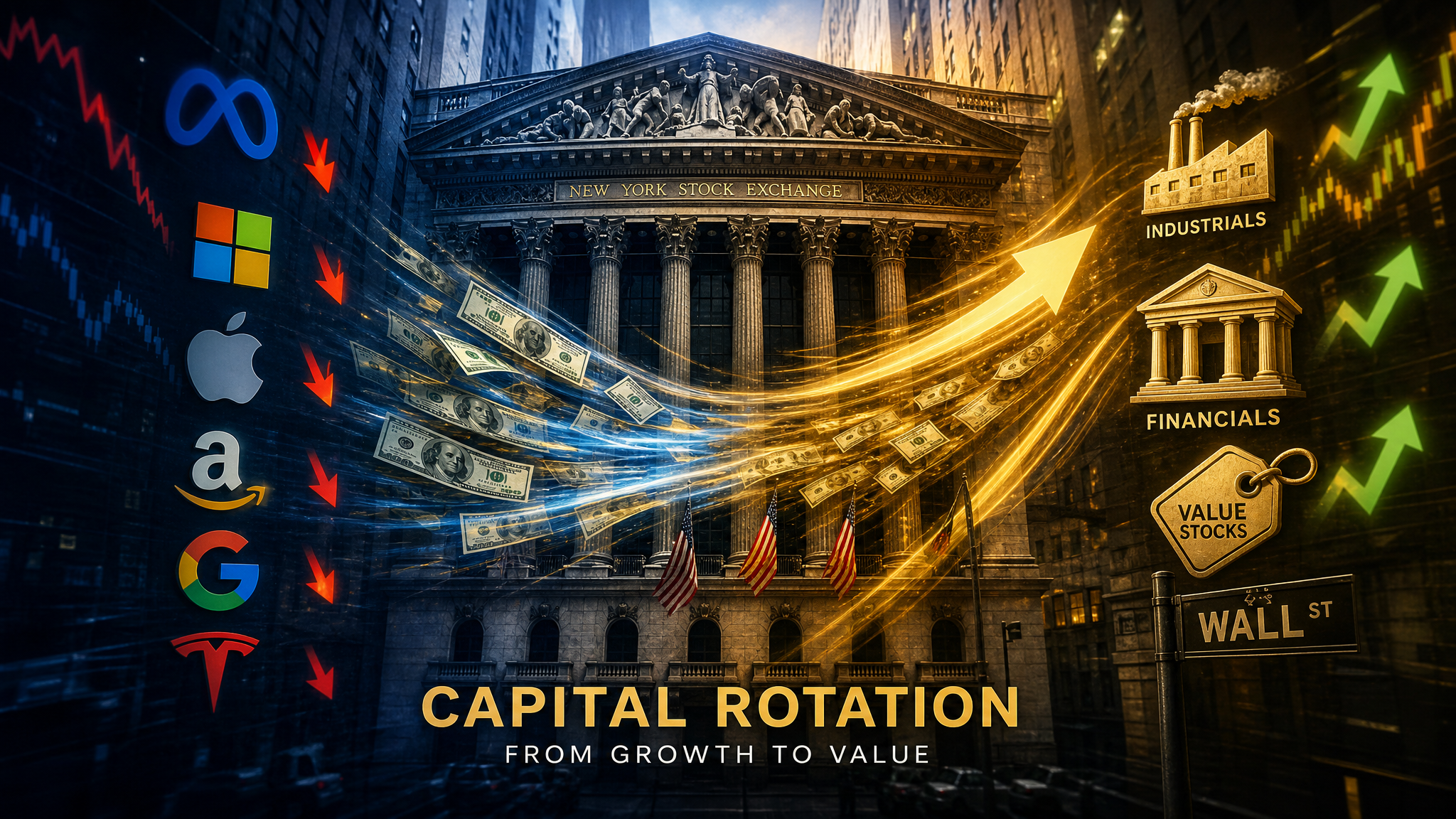
Something fundamental is shifting beneath the surface of US equity markets. While headline indices appear calm, a powerful undercurrent is redirecting trillions of dollars away from the high-growth technology names that have dominated Wall Street for years and into the overlooked corners of the market—value stocks, cyclicals, and defensive sectors. This "great rotation," as strategists are calling it, is one of the most significant structural shifts in US equities since the post-pandemic AI boom began, and understanding it is essential for any investor navigating the second half of 2026.
A Tale of Two Indices
The clearest evidence of this rotation lies in the diverging performance of the two most-watched US benchmarks. The Dow Jones Industrial Average has surged to new record highs in July 2026, powered by its heavy weighting toward industrial and financial blue chips. Meanwhile, the S&P 500 has been consolidating in a tight range near its all-time highs, weighed down by selling pressure in its largest technology constituents. This performance gap is not a coincidence—it is a direct reflection of where institutional money is flowing.
The S&P 500 Equal Weight Index, which gives every company the same influence regardless of market capitalization, has significantly outperformed its market-cap-weighted counterpart throughout the first half of 2026. This is a critical signal. When the equal-weight version outperforms, it means the average stock is doing well—not just the handful of mega-cap giants that dominate the traditional index. As of mid-July, approximately 62% to 66% of S&P 500 constituents were trading above their 50-day moving averages, a level of market breadth that analysts describe as "constructive" and indicative of a healthier, more sustainable rally.
Who Is Winning the Rotation?
The beneficiaries of this capital shift span a surprisingly diverse range of sectors, creating what some strategists describe as a "barbell" approach among institutional investors.
Financials Lead the Charge
Major US banks have been among the standout performers, with several hitting record highs earlier in July following a strong second-quarter earnings season. The sector benefits from a positively sloped yield curve, which allows banks to borrow at lower short-term rates and lend at higher long-term rates, expanding their net interest margins. Solid loan growth and resilient credit quality have further bolstered the case for financial stocks as a core holding in a rotation-driven portfolio.
Defensives Attract Safety Seekers
Healthcare, consumer staples, and utilities have also emerged as leaders in this new market environment. Investors are increasingly seeking the stability and predictable cash flows these industries offer as a counterweight to the heightened volatility in the technology space. With the Federal Reserve maintaining a hawkish stance and economic data sending mixed signals, the appeal of dividend-paying, recession-resistant businesses has grown considerably.
Industrials Ride the Economic Resilience Wave
Cyclical sectors, particularly industrials, have gained momentum supported by resilient economic data and a stable outlook that has tempered earlier recession fears. Infrastructure spending, reshoring of manufacturing, and continued strength in aerospace and defense have provided fundamental tailwinds for this sector. The Dow's price-weighted structure, which gives more influence to industrial blue chips, has made it the primary beneficiary of this trend.
Why Is Tech Underperforming?
The underperformance of growth-oriented technology stocks is not, according to most analysts, a sign of a broken long-term theme. Rather, it represents a necessary correction after years of valuation expansion that priced in perfection. The AI and semiconductor space, in particular, had become crowded trades with stretched valuations. Investors are now grappling with a critical question: when will the hundreds of billions being spent on AI infrastructure translate into proportional earnings growth?
This "AI capex reckoning" has created a headwind for the sector. Companies that continue to raise spending guidance without demonstrating a clear path to monetization are being punished by the market, regardless of their top-line revenue growth. This dynamic has prompted institutional investors to reduce concentration risk in technology and reallocate capital to sectors where valuations are more attractive and earnings visibility is higher.
What This Means for Investors
The great rotation of 2026 carries important implications for portfolio construction. Investors who have been heavily concentrated in technology and growth stocks may find that diversification into value, cyclical, and defensive sectors not only reduces risk but also enhances returns in the current environment. The broadening of market leadership is generally considered a positive sign for the overall health of the bull market, suggesting that the rally has a wider foundation than it did when it was driven by just a handful of mega-cap names.
However, the rotation is not without risks. If economic data deteriorates sharply, cyclical sectors could face headwinds. And if the Federal Reserve pivots more quickly than expected toward rate cuts, growth stocks could stage a powerful comeback. The key for investors is to monitor the underlying drivers of the rotation—valuations, earnings growth, and the Fed's policy trajectory—rather than simply chasing recent performance.
As the second half of 2026 unfolds, the great rotation may prove to be one of the defining investment themes of the year. Those who understand its drivers and position accordingly will be best placed to navigate what promises to be a dynamic and opportunity-rich market environment.
This content is for informational purposes only and does not constitute financial advice. Always consult with a qualified financial advisor before making investment decisions.
Discussion