Turkey Reserves, BIST 100 and Lira: The $160.5 Billion Test
Turkey's total official reserve assets reached $160.5 billion for the week ending 17 July 2026 — a headline figure that sounds reassuring until you examine what it contains, what it excludes and what it must cover. For investors in Turkish equities, lira-denominated bonds or Turkish sovereign risk, the composition of those reserves matters far more than the aggregate number.
Market Snapshot
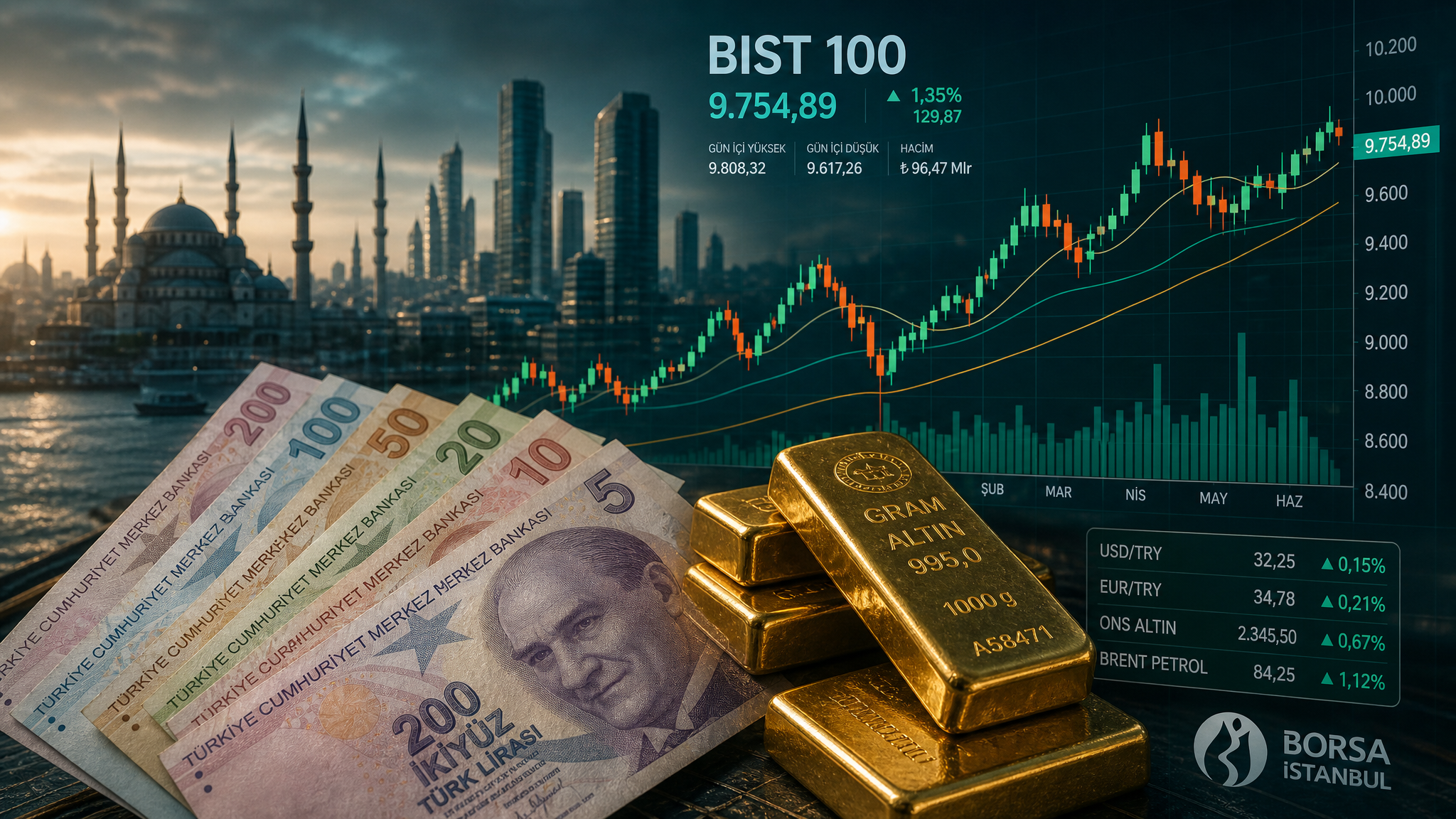
The BIST 100 closed at 14,078 on 23 July, down 0.43% in the session and 1.77% over one month, but still 31.70% higher year on year. USD/TRY reached 47.3453 on 24 July, while the ECB reference EUR/TRY rate stood at 53.8103 on 23 July. The TCMB held its one-week repo rate at 37% on 23 July, with the overnight lending rate at 40% and the borrowing rate at 35.5%.
These numbers tell a story of nominal equity gains that look very different once currency depreciation is factored in. The lira has fallen 16.73% against the dollar over the past 12 months. A foreign investor who held the BIST 100 over that period in dollar terms would have seen a materially smaller gain than the 31.70% lira-denominated return suggests.
Unpacking the $160.5 Billion Reserve Figure
The $160.5 billion total official reserve figure breaks down into three distinct components, each with different liquidity and usability characteristics. Foreign-currency reserves account for $57.7 billion — the most immediately deployable portion. Gold reserves represent $95.1 billion, a figure that includes gold deposits and swap arrangements and is therefore not fully liquid in a stress scenario. IMF reserve position and Special Drawing Rights account for the remaining $7.7 billion.
A secondary series from market data providers reports gross foreign-exchange reserves of $65.43 billion for the same date. This figure is closer in concept to the foreign-currency component than to total official reserves. The discrepancy reflects different definitions rather than a data error, but it illustrates why the headline $160.5 billion figure requires careful interpretation.
The Liability Side of the Equation
Reserve adequacy cannot be assessed without examining what those reserves must cover. Short-term public-sector foreign-exchange liabilities stood at $122.8 billion for the week ending 17 July, comprising $57.4 billion of predetermined liabilities and $65.4 billion of contingent liabilities. FX liabilities from swap arrangements totalled $16.6 billion, partially offset by $3.1 billion of net receivables from gold swaps.
When the foreign-currency component of reserves ($57.7 billion) is set against predetermined short-term liabilities ($57.4 billion), the coverage ratio is extremely tight. The broader total reserve figure provides more comfort, but only if gold can be mobilised quickly and at current market prices — an assumption that may not hold in a genuine stress scenario.
Inflation, Rates and the Real Return Question
Annual inflation was reported at 32.11% in June 2026, down from 32.61% in May, with monthly inflation of 0.99%. At a 37% policy rate, the nominal gap between the rate and the latest annual inflation figure is positive, but this simple arithmetic is not a forward real-rate measure. Inflation expectations, the composition of the price basket and the trajectory of energy costs all affect the real return that investors actually receive.
Turkey recorded a $1.46 billion current-account deficit in May, taking the January–May total to $30.68 billion, up from $23.73 billion in the same period of 2025. The services sector provides a material buffer: the 12-month services surplus reached $63.1 billion and travel revenues totalled $60.4 billion as of March. Tourism income remains one of Turkey's most important external financing sources, and any disruption to visitor flows would tighten the external balance significantly.
A Three-Part Checklist for Foreign Investors
Foreign investors assessing Turkish exposure should apply three tests rather than relying on the headline reserve figure. First, compare BIST 100 performance in TRY, USD and EUR terms — Borsa İstanbul maintains dollar and euro index variants that make this comparison straightforward. Second, monitor the foreign-currency portion of reserves rather than total assets, since gold and SDRs are less immediately deployable. Third, compare liquid reserves with short-term and contingent liabilities to assess the real buffer against external shocks.
Turkey's reserve position has improved materially from the crisis lows of 2021–2022, and the current-account services surplus provides genuine support. But the composition of reserves, the scale of short-term liabilities and the ongoing lira depreciation mean that the $160.5 billion headline figure is the beginning of the analysis, not the conclusion. Reserve quality, not reserve quantity, is the next credibility test for Turkish markets.
This content is for informational purposes only and does not constitute financial advice. Always consult with a qualified financial advisor before making investment decisions.
Discussion