US-China Trade War 2.0: Tariffs, Retaliation, and the Race to Reshape Global Supply Chains
US-China trade relations in mid-2026 have entered a new and more complex phase—one that defies simple characterization as either escalation or de-escalation. The Trump administration is simultaneously pursuing two seemingly contradictory strategies: building new institutional frameworks for long-term trade management while aggressively applying targeted tariffs and compliance measures related to national security and forced labor. For US companies with exposure to China, navigating this dual-track approach has become one of the most challenging strategic imperatives of the decade.
The Board of Trade: A New Architecture for Bilateral Commerce
The most significant structural development in US-China trade relations is the proposed establishment of a US-China Board of Trade. This government-to-government body is intended to oversee and manage trade in designated "non-sensitive" products, creating a formal mechanism for future tariff adjustments and dispute resolution. The goal is to move away from the crisis-style diplomacy that has characterized the relationship for the past several years and toward a more predictable, rules-based process.
As part of this initiative, the two nations are negotiating reciprocal tariff reductions on approximately $30 billion worth of bilateral trade. China has agreed in principle to include agricultural products in these reductions, and the White House has indicated that Beijing has committed to purchasing $17 billion in US agricultural goods annually through 2028. The US Trade Representative (USTR) is actively seeking public comment from businesses to identify which product categories should be prioritized for this long-term tariff liberalization—a process that gives US companies a direct voice in shaping trade policy.
This institutional approach reflects a recognition on both sides that the bilateral trade relationship is too large and too complex to manage through ad hoc negotiations and tariff threats. Total US-China trade in goods exceeded $600 billion in 2025, and the two economies are deeply intertwined across supply chains, financial markets, and technology ecosystems. A more structured framework for managing this relationship, even if imperfect, is preferable to the uncertainty of perpetual trade war.
The Enforcement Track: Tariffs and Forced Labor Compliance
While the Board of Trade initiative represents the cooperative track of US trade policy, the enforcement track is simultaneously intensifying. On June 2, 2026, the USTR proposed additional duties of up to 12.5% on imports from China and 59 other economies following Section 301 investigations that found widespread failures to enforce prohibitions on goods made with forced labor. This move is part of the administration's "America First" agenda, which prioritizes the reshoring of supply chains and leveling the playing field for American workers and manufacturers.
The forced labor compliance requirements are particularly challenging for US companies with complex supply chains in China. The Uyghur Forced Labor Prevention Act (UFLPA), which creates a rebuttable presumption that goods from Xinjiang are made with forced labor, has already forced significant supply chain restructuring across industries from solar panels to cotton apparel. The new Section 301 duties add another layer of compliance burden, requiring companies to document and verify their supply chains with unprecedented rigor.
Beijing Strikes Back: Retaliation and Countermeasures
China has not been passive in the face of US trade pressure. In April 2026, Beijing implemented new regulations on "Countering Improper Extraterritorial Jurisdiction" and "Industrial and Supply Chain Security," creating potential legal conflicts for US firms operating in China. These regulations give Chinese authorities broad powers to penalize companies that comply with US sanctions or export controls in ways that harm Chinese interests—putting US multinationals in an impossible position between the legal requirements of two governments.
In a direct response to the US blacklisting of Chinese technology firms, Beijing placed 10 US industrial suppliers—including rare earth miners MP Materials and USA Rare Earth—on its own export control list in June 2026. It also banned 46 US defense and aerospace contractors, including subsidiaries of Boeing and Lockheed Martin, from participating in Chinese government procurement projects. While the immediate financial impact of these bans may be limited for many of the targeted firms, they represent a significant escalation and a direct challenge to US efforts to decouple critical technology and mineral supply chains.
The Supply Chain Reshaping Race
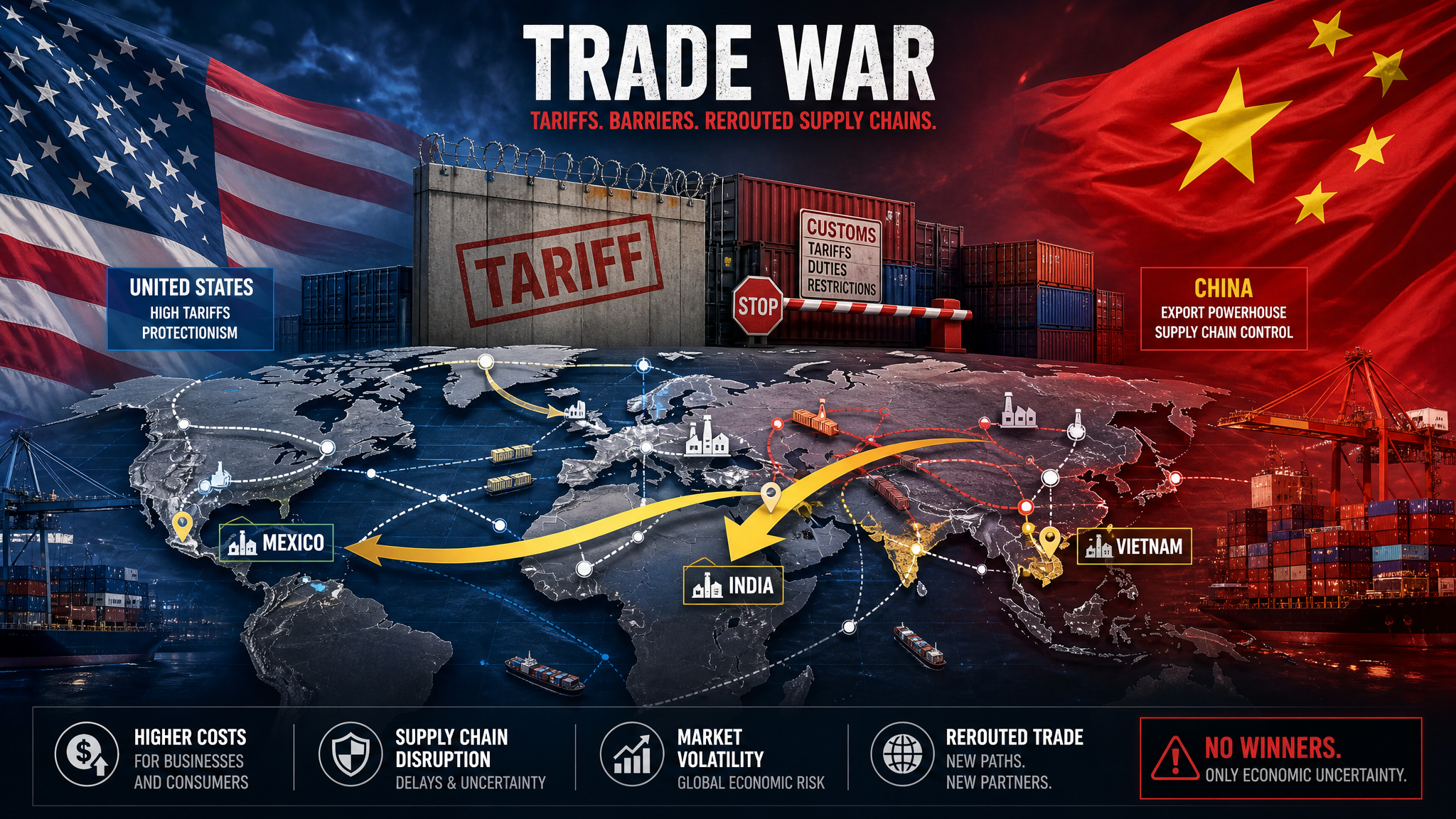
The most consequential long-term impact of the US-China trade conflict is the accelerating restructuring of global supply chains. US companies across industries are actively diversifying their manufacturing and sourcing away from China, a process that has been underway since the first trade war in 2018 but has accelerated dramatically in 2025-2026. Vietnam, India, Mexico, and other emerging markets are the primary beneficiaries of this shift, attracting significant foreign direct investment from US companies seeking to reduce their China exposure.
However, supply chain diversification is neither quick nor cheap. Many industries remain deeply dependent on Chinese manufacturing capabilities, particularly in electronics, chemicals, and advanced materials. The rare earth situation is particularly acute: China controls approximately 60% of global rare earth mining and 85% of processing capacity, and its ability to restrict exports of these critical materials—used in everything from electric vehicles to military equipment—gives it significant leverage in the trade conflict.
What US Companies Must Do Now
For US companies navigating this complex environment, the key is active engagement with policymakers and proactive supply chain management. Companies that provide data-driven evidence to the USTR about the economic impact of tariffs on their operations have a genuine opportunity to shape policy outcomes. Those that wait passively for the trade environment to stabilize risk being caught off guard by the next escalation.
The dual-track nature of US-China trade policy means that the environment will remain volatile and unpredictable for the foreseeable future. The Board of Trade initiative offers the prospect of greater stability in non-sensitive sectors, but the enforcement track will continue to create disruption in technology, defense, and critical materials. Companies that build resilient, diversified supply chains and maintain strong relationships with both US and Chinese policymakers will be best positioned to thrive in this new era of managed competition.
This content is for informational purposes only and does not constitute financial advice. Always consult with a qualified financial advisor before making investment decisions.