Beyond the Megacap Narrative: Three Operating Tests for the 2026 Technology Earnings Season
Technology earnings season in 2026 is being assessed against an unusually demanding set of expectations. After years of capital expenditure commitments to AI infrastructure—collectively estimated in the hundreds of billions of dollars across the major hyperscalers—investors are now asking a more pointed question: where is the revenue? The useful analytical lens for this earnings cycle is not whether AI "works" in a general sense, but whether specific companies are converting infrastructure investment into measurable cloud growth, software monetization, and hardware demand. Three operating tests define the season.
Test One: Cloud Conversion
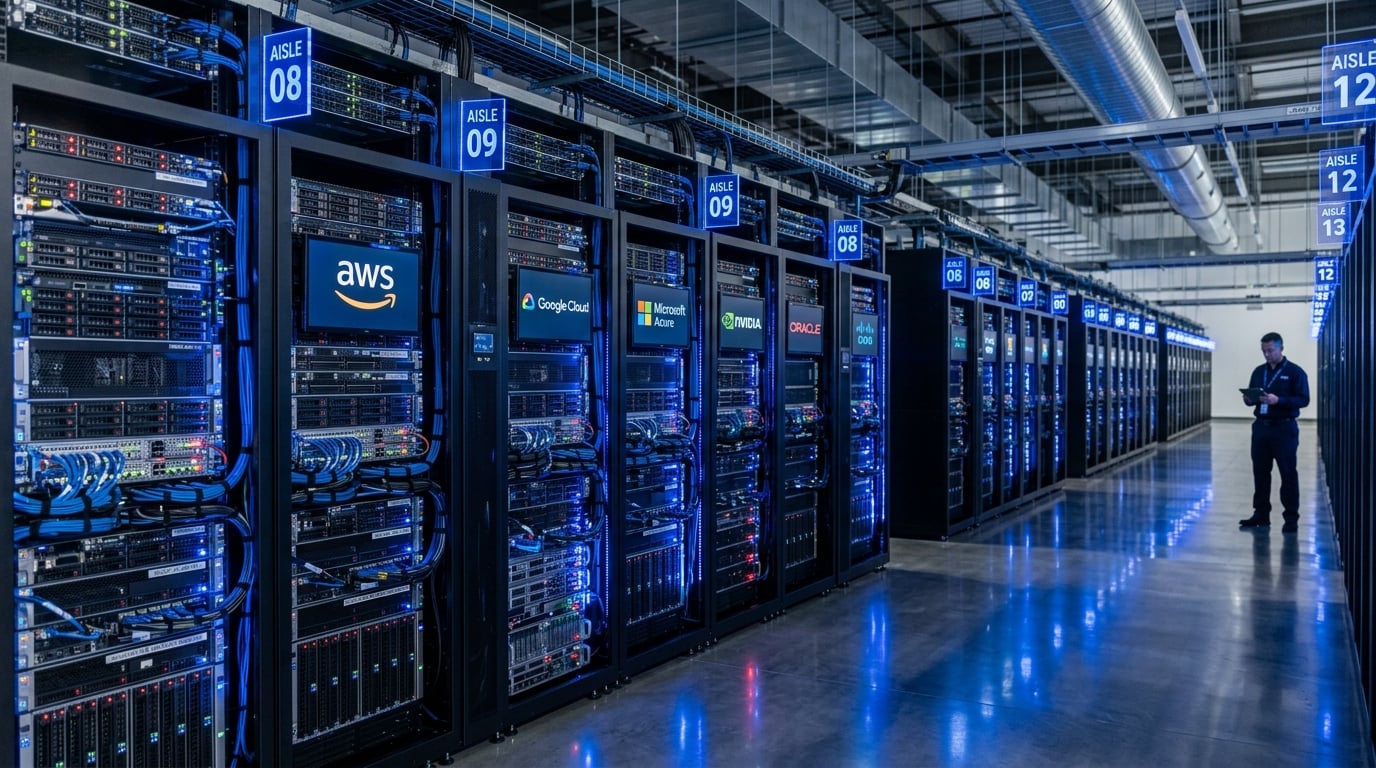
Microsoft's Azure cloud platform is the most closely watched indicator of AI infrastructure monetization. The company has targeted Azure growth of 25%–30% year over year, a range that reflects both organic cloud adoption and the incremental contribution from AI workloads. The key distinction investors need to make is between usage growth—which can be driven by free trials, developer experimentation, and internal Microsoft projects—and paid adoption, which reflects genuine enterprise demand at commercial pricing.
The Copilot suite of AI-assisted productivity tools is the second dimension of Microsoft's monetization test. Copilot is embedded across Microsoft 365, GitHub, and Azure, and its commercial success depends on enterprises paying incremental subscription fees for AI-enhanced functionality. Early adoption data has been mixed: some enterprise customers have reported productivity gains, while others have been slower to deploy Copilot at scale due to data governance concerns and integration complexity. The earnings report will provide the first comprehensive picture of paid Copilot penetration across Microsoft's customer base.
Test Two: Connectivity and Hardware Demand
Broadcom has emerged as a critical indicator of data-center infrastructure demand that is often overlooked in coverage focused on the hyperscalers themselves. The company's networking and custom silicon businesses serve the connectivity layer of AI data centers—the switches, routers, and application-specific integrated circuits that allow GPU clusters to communicate at the speeds required for large-scale AI training and inference. If Broadcom's data-center revenue is growing, it provides independent confirmation that infrastructure buildout is continuing at a meaningful pace.
AMD's MI300X data-center accelerator is the second hardware test. AMD has positioned the MI300X as a competitive alternative to Nvidia's H100 and H200 GPUs for AI inference workloads. The degree to which hyperscalers and enterprise customers are adopting MI300X—rather than defaulting entirely to Nvidia—will indicate whether the AI accelerator market is developing genuine competition or remaining a near-monopoly. AMD's reported traction in this segment will be a key data point for assessing the competitive dynamics of the AI hardware market.
Test Three: Execution and Margins
Apple's earnings test is structurally different from the cloud and hardware tests. Apple's AI exposure is primarily through on-device intelligence features embedded in iOS and macOS, rather than through cloud infrastructure or enterprise software. The relevant metrics are services revenue growth—which includes the App Store, Apple Music, iCloud, and Apple Intelligence subscriptions—and gross margin guidance for the September quarter.
Services revenue has been Apple's fastest-growing segment and its highest-margin business. If services growth accelerates in the June quarter, it would suggest that Apple's installed base is monetizing AI features at a rate that justifies the company's premium valuation. Gross margin guidance is equally important: Apple's ability to maintain margins above 45% while investing in AI development and managing component costs will determine whether the company can sustain its earnings trajectory.
Intel's foundry execution represents the most binary test of the season. The company's 18A manufacturing process—its most advanced node—is the foundation of Intel's strategy to reclaim technological leadership in semiconductor manufacturing. If Intel can demonstrate that 18A is yielding at commercially viable rates and attracting external customers, it would validate the company's multi-year turnaround thesis. A failure to demonstrate progress would raise questions about the viability of Intel's foundry ambitions and its ability to compete with TSMC and Samsung.
The Calendar Uncertainty Problem
One complication for investors tracking this earnings season is conflicting information about reporting dates. Available evidence places some major technology reports in mid-July, while other accounts describe them as upcoming on July 21. This discrepancy means that investors should verify reporting dates directly with company investor relations pages rather than relying on secondary sources. The analytical framework above applies regardless of the specific reporting sequence, but the timing of market reactions will depend on when results are actually released.
The Broader Stakes
The 2026 technology earnings season is the first comprehensive test of whether the AI investment cycle is producing returns commensurate with the capital deployed. The three operating tests—cloud conversion, connectivity demand, and execution margins—provide a structured way to evaluate results without relying on narrative claims about AI's transformative potential. Companies that deliver on these specific metrics will have demonstrated that their AI investments are generating measurable economic value. Those that fall short will face difficult questions about the timeline and magnitude of their expected returns.
This content is for informational purposes only and does not constitute financial advice. Always consult with a qualified financial advisor before making investment decisions.
Discussion