Can Stock Connect Absorb Hong Kong's Record Wave of Unlocked Shares?
Hong Kong's Hang Seng Index climbed from 23,350.03 on July 3 to 24,175 on July 10 and 25,009 on July 17, a three-week advance of roughly 7% that placed total Hong Kong market assets at a reported record of $5.38 trillion. The rally was led by technology and AI-linked shares, with Alibaba, SMIC and recently listed growth companies among the prominent movers. But the advance unfolded against an unusual structural backdrop: July brought a record wave of IPO lock-up expirations, creating a potential supply overhang that tested whether mainland capital flowing through Stock Connect could absorb newly tradable shares without destabilizing prices.
The Lock-Up Expiration Challenge
When companies list on the Hong Kong Stock Exchange, early investors — founders, pre-IPO funds and strategic shareholders — are typically restricted from selling their shares for a defined period, usually six months. When that period expires, the newly tradable shares enter the market as potential supply. In a normal month, a handful of lock-up expirations create manageable pressure. In July 2026, the volume of expiring restrictions was described as a record, concentrated particularly among AI and technology companies that had listed during the previous year's issuance boom.
The concern was straightforward: if early investors chose to sell their newly tradable shares simultaneously, the resulting supply could overwhelm demand and push prices lower, potentially triggering a broader technology sell-off. Initial market anxiety around this scenario was visible in early July volatility. What actually happened was more nuanced — holders did not immediately liquidate all unlocked stock, and the market showed resilience as a result.
Stock Connect as the Shock Absorber
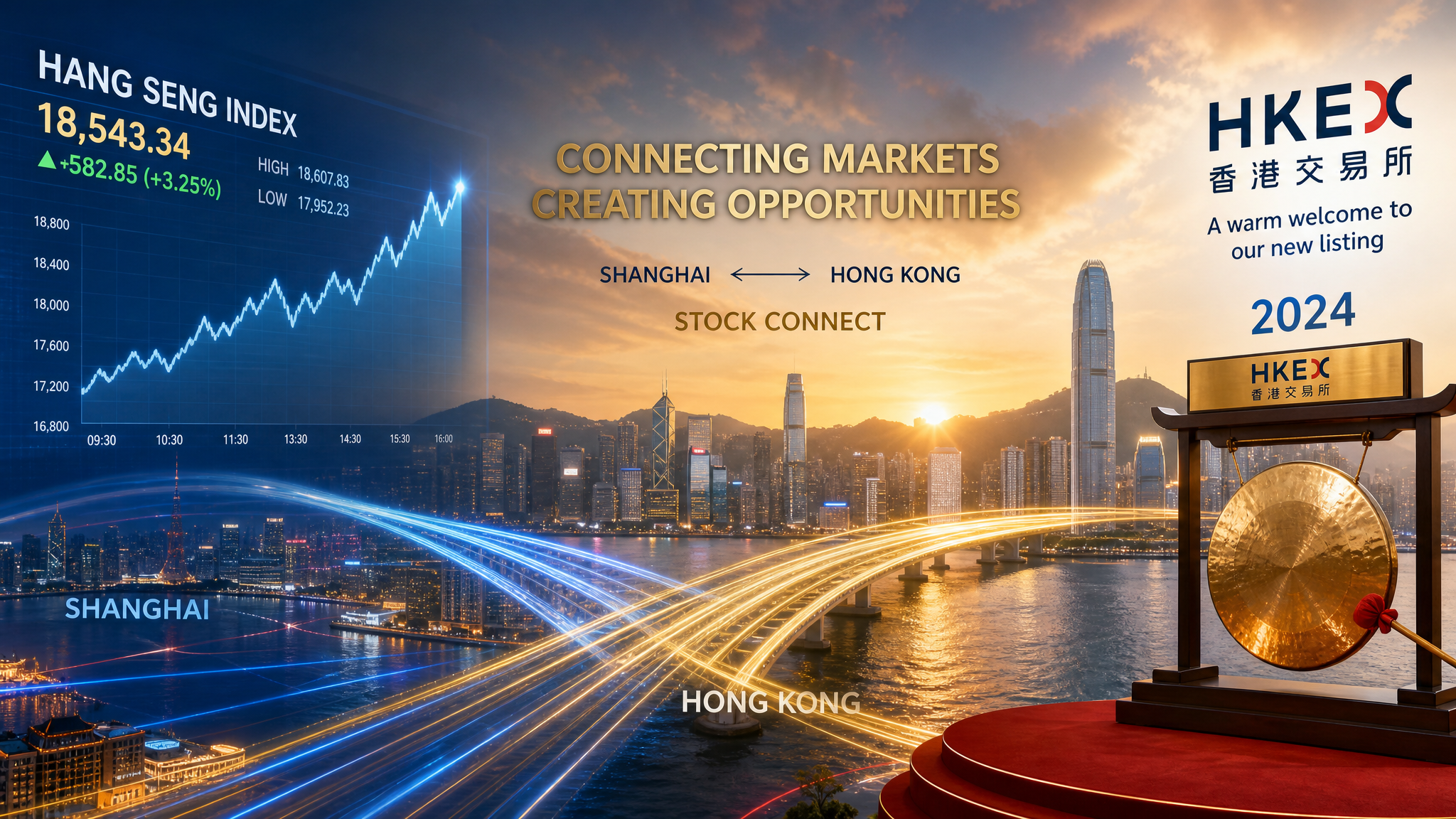
The mechanism that provided the most visible support was southbound Stock Connect, the channel through which mainland Chinese investors buy Hong Kong-listed shares. By early July, mainland investors had recorded approximately $3.5 billion of net buying through the Connect, directed particularly toward AI-related and consumer shares. These flows reversed previous outflows and cushioned broader volatility during the lock-up expiration period.
Stock Connect is more than a sentiment statistic. It is the infrastructure that links mainland demand to Hong Kong's tradable supply. When southbound flows are strong, they effectively create a floor under prices by absorbing shares that domestic or international sellers are offering. The July experience suggested that mainland institutional and retail appetite for Hong Kong technology names remained sufficient to offset the lock-up supply — at least at the volumes that actually came to market.
HKEX's Reform Agenda
The Hong Kong Stock Exchange was simultaneously pursuing a set of listing reforms designed to increase future issuance and improve the market's competitiveness as a capital-raising venue. The proposed changes included broader access to confidential filing procedures — allowing companies to test investor appetite before committing to a public process — and lower market-capitalization thresholds for start-ups and overseas issuers seeking a Hong Kong listing.
The exchange was also considering additional fixed-income and derivative products as part of a broader competitiveness strategy. These reforms were expected to be finalized by the end of July, though final rules had not yet taken effect as of July 22. The direction of travel was clear: HKEX wants to attract more issuers, particularly from the technology and growth sectors, and to reduce the friction that has historically made Hong Kong a less accessible venue than New York or London for early-stage companies.
The Tension Between Supply and Liquidity
The reform agenda creates a structural tension that the July lock-up experience made visible. Confidential filings and lower thresholds may improve Hong Kong's ability to compete for issuers, but successful issuance increases the supply that investors must absorb. A market that attracts more listings will face more lock-up expirations in future months. The question is whether the liquidity infrastructure — primarily Stock Connect, but also international institutional participation — can scale proportionally.
The Hang Seng TECH Index, which tracks 30 large Hong Kong technology companies, has become the primary vehicle through which this tension plays out. Technology names dominate both the new issuance pipeline and the southbound buying flow. If mainland appetite for Hong Kong technology remains strong, the supply-absorption mechanism works. If it reverses — as it did in earlier periods of mainland risk aversion — the same concentration that drove the July rally could amplify any correction.
Market Structure Over Macro
Hong Kong's July story is ultimately about market plumbing rather than China's macroeconomic trajectory. The Hang Seng's advance from 23,350 to 25,009 was not primarily driven by improved earnings expectations or a change in PBOC policy. It was driven by the interaction between a specific supply event — lock-up expirations — and a specific demand mechanism — southbound Stock Connect flows — in a market that is simultaneously trying to expand its issuance capacity.
For investors, the indicators to watch are not just the index level but the composition of southbound buying, the pace at which unlocked shares are actually sold, and the breadth of the technology rally beyond the handful of names that have dominated recent sessions. A market that rises on narrow leadership and concentrated demand is more vulnerable to reversal than one where gains are distributed across sectors and investor types.
This content is for informational purposes only and does not constitute financial advice. Always consult with a qualified financial advisor before making investment decisions.
Discussion