Claims Shock: 187,000 Jobless Filings Upend the Soft-Landing Narrative Ahead of the FOMC
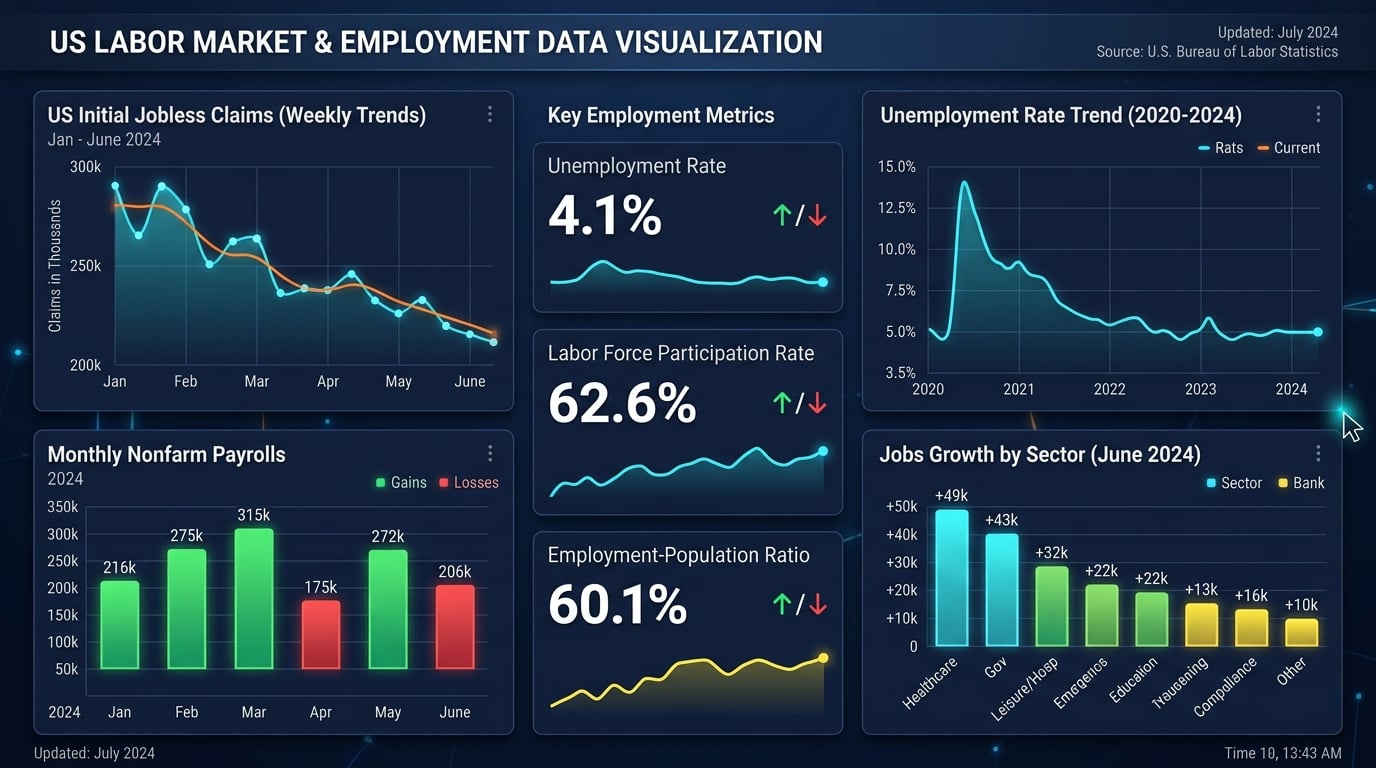
The week ending July 19 produced one of the most significant labor market surprises of 2026: initial jobless claims came in at 187,000, dramatically below the consensus forecast of 211,000 to 212,000. The miss was not a rounding error or a seasonal quirk — it was a signal that the U.S. labor market remains far tighter than the Federal Reserve's models anticipated at this stage of the tightening cycle. With the FOMC meeting scheduled for July 28–29, the claims data arrived at the worst possible moment for investors hoping that a softening economy would give the committee reason to pause or pivot.
What the Number Actually Measures
Initial jobless claims measure the number of people filing for unemployment insurance for the first time in a given week. They are one of the most timely labor market indicators available, released weekly with only a short lag. A reading of 187,000 is not just below the consensus — it is historically low. For context, claims in the 180,000–200,000 range are typically associated with a very tight labor market, one in which employers are reluctant to let workers go even when business conditions soften. The fact that claims are printing at these levels more than two years into a restrictive monetary policy cycle suggests that the labor market has proven far more resilient than the Fed's rate hikes were designed to produce.
Continuing claims — which measure the number of people already receiving unemployment benefits — stood at 1.805 million in the most recent available reading. That figure provides a complementary picture: not only are few new workers being laid off, but those who do lose jobs are finding new employment relatively quickly, keeping the stock of continuing claimants contained.
Why This Complicates the Fed's Calculus
The Federal Reserve's dual mandate requires it to pursue both maximum employment and price stability. In a normal cycle, a tight labor market would be a sign of success on the employment side. But in the current environment, where inflation remains above the 2% target and energy prices are rising again, a labor market that refuses to cool is a problem. Wage growth in a tight labor market feeds into services inflation — the component of the consumer price index that the Fed watches most closely because it is the most persistent and the hardest to bring down through interest rate policy alone.
The claims surprise therefore does two things simultaneously: it reduces the probability that the Fed will feel comfortable cutting rates anytime soon, and it increases the probability that the committee will feel compelled to raise rates further if inflation data do not improve. The market's response was immediate — the probability of a July rate hike rose to 28%, and the odds of a September hike climbed above 78%, both moving in the direction of a more restrictive policy path.
Consumer Confidence: The Next Data Point
The Conference Board's Consumer Confidence Index is scheduled for release on July 28 — the same day the FOMC meeting begins. That timing is significant. Consumer confidence is a leading indicator of spending behavior, and spending is the primary driver of U.S. economic growth. If confidence holds up despite higher yields and rising energy prices, it would reinforce the picture of a resilient economy that the claims data already suggest. If confidence falls sharply, it would introduce a countervailing signal — one that might give the Fed reason to be more cautious about additional tightening even in the face of a tight labor market.
The interaction between the claims data and the confidence reading will be one of the most closely watched data sequences of the week. A strong claims number followed by a weak confidence reading would create a genuinely ambiguous picture: a labor market that is still adding jobs and retaining workers, but consumers who are beginning to feel the cumulative weight of higher borrowing costs and elevated prices. That combination would make the Fed's communication task at the July 29 press conference considerably more difficult.
Durable Goods and PMI: The Manufacturing Dimension
Beyond claims and confidence, the week's economic calendar includes durable goods orders and purchasing managers' index readings that will provide a more complete picture of where the U.S. economy stands heading into the second half of 2026. Durable goods orders — which measure demand for long-lasting manufactured products — are a useful gauge of business investment intentions. A strong reading would suggest that companies are still willing to commit capital despite higher borrowing costs, while a weak reading would indicate that the Fed's tightening is beginning to bite in the investment-goods sector.
PMI readings for manufacturing and services will similarly be scrutinized for signs of either resilience or deterioration. The manufacturing sector has been under pressure for much of 2026, while services have remained more robust. Any divergence between the two — or any sign that services are beginning to weaken — would add to the complexity of the Fed's assessment at the July meeting.
The Soft Landing Is Not Yet Confirmed
The 187,000 claims reading is a reminder that the soft-landing narrative — in which the Fed brings inflation down without triggering a recession — is not yet confirmed. A labor market this tight is consistent with continued wage pressure and persistent services inflation, which are precisely the conditions that make the Fed's job hardest. The committee will have to weigh the strength of the labor market against the risk that additional tightening tips the economy into a harder landing than intended. That tension will be at the center of every policy discussion between now and the July 29 decision.
This content is for informational purposes only and does not constitute financial advice. Always consult with a qualified financial advisor before making investment decisions.
Discussion