Five Days to the FOMC: Markets Price a More Restrictive Fed as Yields Hit 18-Month Highs
With the Federal Open Market Committee scheduled to convene on July 28–29, 2026, financial markets are no longer treating the meeting as a formality. The probability of a rate increase at the July session has climbed to 28%, up sharply from 11% the previous week, while the market-implied odds of a September hike have risen above 78%. The 10-year Treasury yield reached 4.71% on July 23 — its highest level since January 2025 — signaling that investors are recalibrating their expectations for how long the Federal Reserve will maintain its current restrictive stance, and whether that stance is about to become even tighter.
Where Policy Stands Today
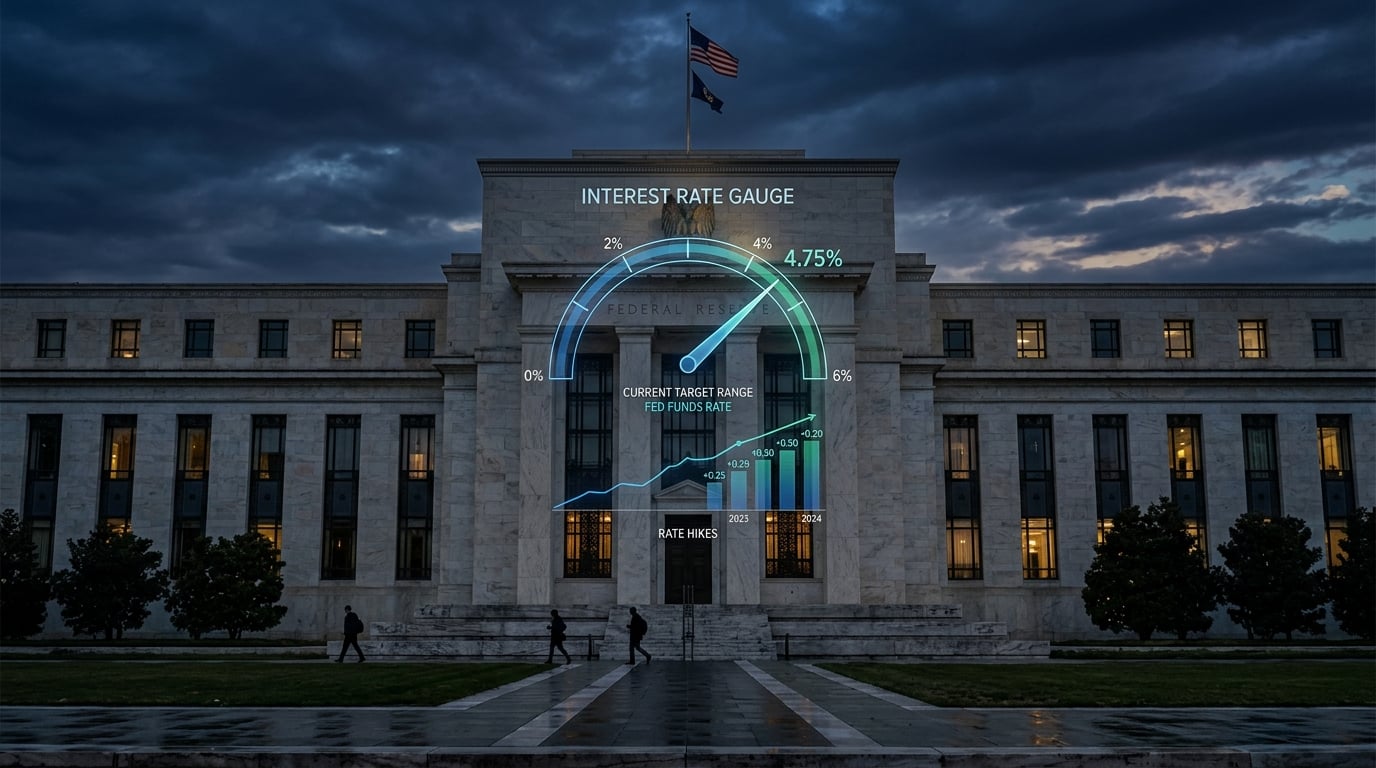
The FOMC left the federal-funds target range at 3.50%–3.75% following its June 16–17 meeting. The minutes from that meeting, released on July 8, gave investors the formal record of the committee's deliberations, but the available evidence does not provide enough detail to characterize the internal debate with precision. What is clear is that the June decision reflected a committee that was not yet ready to declare victory on inflation, even as some economic indicators had begun to soften. The July 28–29 meeting will be the first opportunity for policymakers to respond formally to the data that has arrived since June — including a stronger-than-expected labor market signal and renewed energy price pressure.
The current target range of 3.50%–3.75% represents a policy rate that is meaningfully above most estimates of the neutral rate, meaning that monetary conditions are already restrictive by design. The question before the committee is not whether policy is tight, but whether it is tight enough — and for how long it needs to remain at current levels or move higher to bring inflation sustainably back to the 2% target.
Fed Officials Signal Caution Before the Blackout Period
In the weeks leading up to the July meeting, several Federal Reserve officials made public appearances that provided partial insight into the committee's thinking. Governor Christopher Waller delivered an economic-outlook speech on July 13. Governor Lisa Cook addressed economic conditions on July 15. Vice Chair Philip Jefferson discussed navigating economic shocks on July 16. The available research does not provide sufficient quotation from these appearances to classify each speaker as supporting or opposing an imminent rate change, but the timing of the appearances — all before the pre-meeting blackout period — suggests that officials were aware of the market's growing sensitivity to policy signals and chose their language carefully.
The blackout period, during which Fed officials refrain from public comment on monetary policy, began in the days before the July 28 meeting. That silence amplifies the importance of market-based signals, which have moved decisively in the direction of a more restrictive outlook.
Two Probability Estimates, Two Different Meetings
The 28% probability of a July hike and the above-78% probability of a September hike refer to different meeting horizons and should not be read as contradictory estimates of the same event. The July figure reflects the market's assessment of what the committee will do in five days, given the data already in hand. The September figure reflects a longer-horizon view that incorporates the possibility that July's decision — whether a hold or a hike — will be followed by additional tightening if inflation data remain elevated. Together, the two figures describe a market that is not certain about July but is increasingly confident that the tightening cycle has further to run.
The 10-year yield at 4.71% is the most direct market expression of that view. Long-term yields incorporate expectations about the future path of short-term rates, the inflation premium investors demand for holding fixed-income assets over time, and the term premium that compensates for uncertainty. A yield at an 18-month high suggests that all three components are moving in the same direction: higher expected rates, higher inflation expectations, and greater uncertainty about the policy path.
What the July Meeting Could Deliver
The committee has three broad options at the July 28–29 meeting: hold the target range at 3.50%–3.75%, raise it by 25 basis points to 3.75%–4.00%, or signal a hold while communicating a clear bias toward tightening at subsequent meetings. The market's 28% probability for a July hike implies that a hold remains the base case, but the margin is narrow enough that the post-meeting statement and Chair's press conference will be scrutinized intensely for any shift in language around the balance of risks, the inflation outlook, or the committee's reaction function.
Investors should pay particular attention to whether the statement retains language about the committee being "prepared to adjust" policy if conditions warrant, and whether the Summary of Economic Projections — if released at this meeting — shows any upward revision to the median rate path. Any signal that the committee's tolerance for above-target inflation has diminished would likely push yields higher and equity valuations lower in the sessions immediately following the decision.
The Convergence That Matters
The most meaningful signal before July 28–29 is not a single speech or forecast. It is the convergence of market pricing, the current target range, rising yields, and renewed concern that energy costs could complicate the inflation outlook. Oil prices moving toward and above $100 per barrel on July 23 added a new variable to the committee's calculus — one that could either accelerate the case for additional tightening or, if it proves transitory, provide cover for a hold. The Fed's response to that uncertainty will define the market narrative for the remainder of the summer.
This content is for informational purposes only and does not constitute financial advice. Always consult with a qualified financial advisor before making investment decisions.
Discussion