Hang Seng Rebound Gains Mainland Support as Money Rotates Into Internet Platforms
Hong Kong's equity market is staging a recovery — but it is not the same stocks leading the charge. After the Hang Seng Index fell 5.2% in the week ended June 26, 2026, driven by a hardware-led selloff in AI and semiconductor names, the index rebounded nearly 3% in the following week. The rebound is being powered by a significant rotation: mainland Chinese investors are selling upstream chip-related shares and buying application-layer internet platforms, a shift that has profound implications for how investors should position in Hong Kong equities.
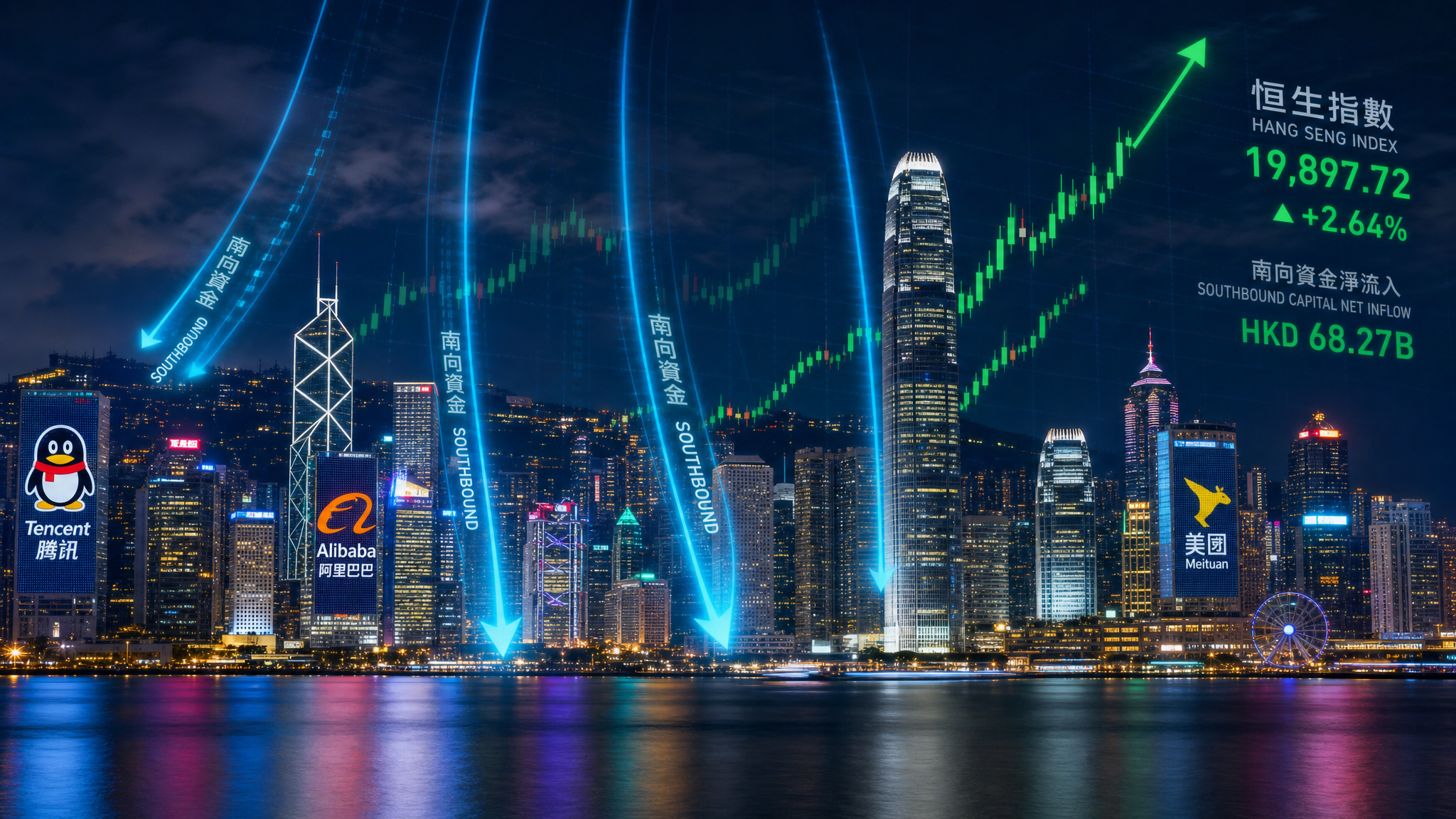
The southbound flow data tells the story more precisely than any headline index movement. On July 6 alone, mainland investors recorded a net inflow of HK$497 million into Hong Kong-listed stocks — but the composition of that buying was highly concentrated. Tencent attracted net purchases of HK$2.32 billion, Meituan received HK$1.24 billion, and Alibaba drew HK$918 million. These are not small, speculative bets; they represent a deliberate institutional rotation from hardware to software, from infrastructure to application.
Why the Rotation Is Happening Now
The logic behind the shift from semiconductor hardware to internet platforms is straightforward. AI hardware names — chipmakers, memory producers, and equipment suppliers — had been the primary beneficiaries of the global AI investment boom, and their valuations had stretched to levels that required near-perfect execution to justify. When the global AI trade began to unwind in mid-July, these names bore the brunt of the selling.
Internet platforms, by contrast, are positioned as beneficiaries of AI deployment rather than AI infrastructure. Tencent, Meituan, and Alibaba are integrating AI capabilities into their existing services — improving recommendation algorithms, automating logistics, and enhancing cloud offerings — without carrying the same capital expenditure burden as hardware manufacturers. From a valuation perspective, they also entered the rotation at more reasonable multiples after years of regulatory pressure had compressed their price-to-earnings ratios.
The gross purchase figures are particularly revealing. The HK$497 million net inflow on July 6 understates the actual buying activity, because it nets out offsetting sales in other sectors. The gross purchases in Tencent, Meituan, and Alibaba alone totaled more than HK$4.4 billion — suggesting that the rotation involved substantial selling of other Hong Kong-listed names to fund the internet platform purchases.
Regulatory Backdrop: Normalization or New Uncertainty?
China's regulatory environment for internet platforms has evolved significantly since the crackdown years of 2021–2022. Anti-monopoly guidelines released in February 2026 prohibit algorithmic coordination of pricing or traffic and ban dominant platforms from imposing "all-network lowest price" requirements. Additional rules effective April 10 restricted fee increases and search blacklisting used to pressure merchants.
These measures represent a form of regulatory normalization — the government is setting clearer rules rather than imposing unpredictable restrictions. However, aggressive instant-retail price competition continues to affect merchant margins, and the profitability risk from competitive subsidies remains real. Investors buying into the internet platform rotation should factor in both the regulatory tailwind from normalization and the earnings headwind from ongoing competitive dynamics.
AI regulation adds another layer of complexity. Beijing is reportedly considering controls on overseas access to leading Chinese AI models, while commerce officials have signaled increasing oversight of AI and semiconductor chips. For Hong Kong-listed technology companies with significant international operations, this creates a new source of regulatory uncertainty that did not exist a year ago.
Digital Asset Infrastructure: A Separate Institutional Catalyst
Hong Kong's financial regulators have been building a parallel institutional catalyst in the digital asset space. The Hong Kong Monetary Authority granted its first fiat-backed stablecoin licences in April 2026, with HSBC and a Standard Chartered joint venture among the initial recipients. Licensed virtual-asset platforms have also been permitted to share global order books and distribute certain shorter-track-record stablecoins to professional investors.
This regulatory framework positions Hong Kong as a credible hub for institutional digital asset activity — not a speculative trading venue, but a regulated financial infrastructure for stablecoin issuance and custody. The long-term significance of this development for Hong Kong's financial sector is substantial, even if the near-term market impact is modest.
IPO Pipeline and Lock-Up Pressure: The Supply Side Risk
The rebound faces a meaningful supply-side challenge. Hong Kong is dealing with a large pipeline of listings and lock-up expirations, and Shein reportedly obtained approval for a Hong Kong IPO in July 2026. Large new listings absorb market liquidity and can create selling pressure as early investors exit lock-up periods.
The durability of the current rebound therefore depends on whether southbound buying is sufficient to absorb both the rotation demand and the new supply coming to market. If mainland inflows broaden beyond the current concentration in three internet names, and if they prove large enough to offset IPO and lock-up selling, the rebound has a credible foundation. If the buying remains narrow and supply overwhelms demand, the recovery could stall.
Investors should monitor the weekly southbound flow data — specifically the gross purchase composition, not just the net figure — as the most reliable leading indicator of whether the rotation has staying power.
This content is for informational purposes only and does not constitute financial advice. Always consult with a qualified financial advisor before making investment decisions.