Nikkei Rebound Tests the Weak-Yen Bargain as Japan's Import Bill Rises
Japan's benchmark Nikkei 225 closed at 67,320 on July 22, gaining 1.64% in a session led by semiconductor and AI-linked shares including Kioxia, SoftBank Group and Advantest. The rebound offered relief after the index retreated roughly 3.54% from its June record peak near 73,000, but it also sharpened a question that has been building all year: how long can a weak yen remain a net positive for Japan's economy when the same exchange rate that rewards exporters is steadily raising the cost of everything the country imports?
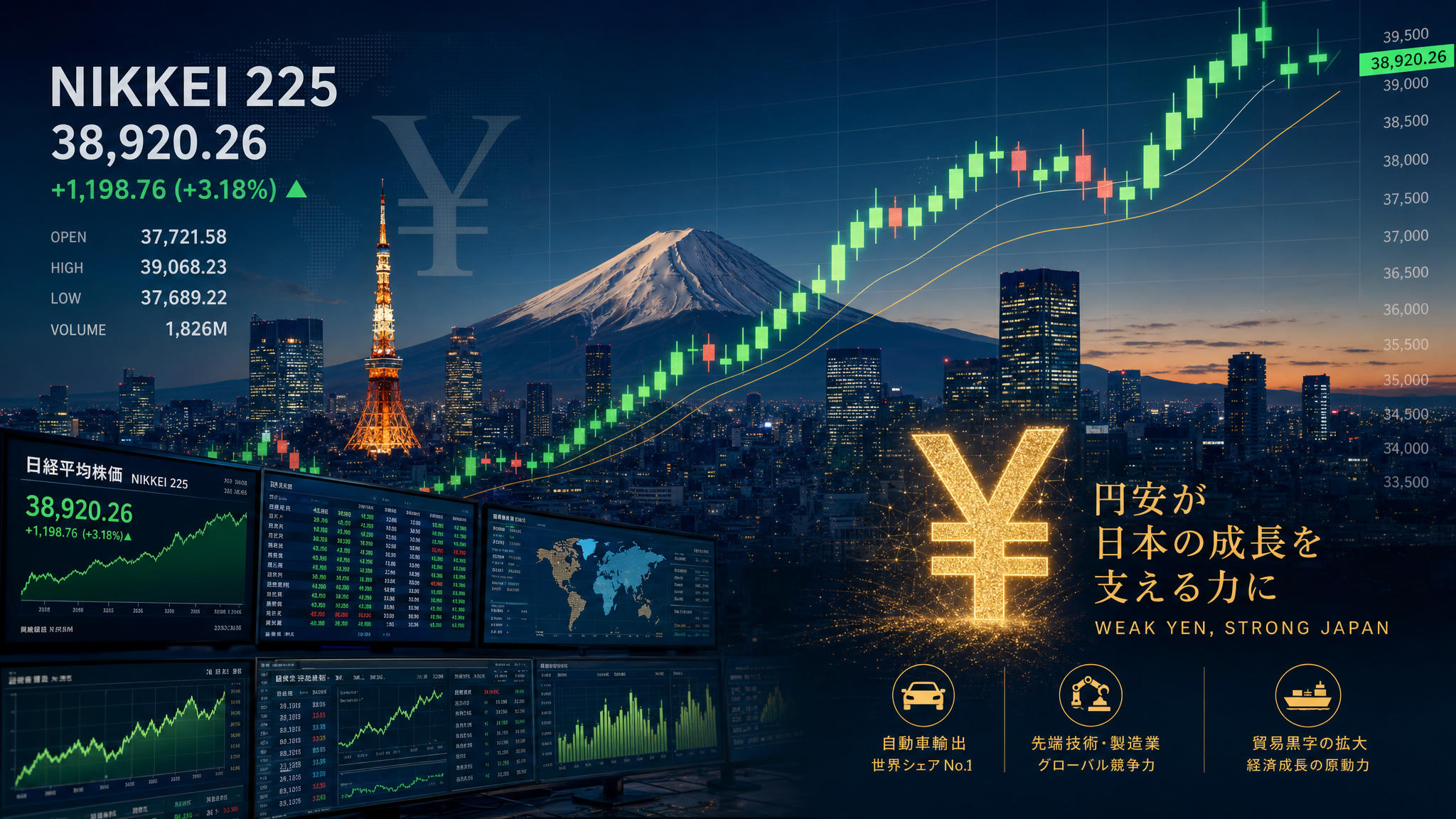
The Exporter Advantage at ¥163
USD/JPY traded near 163.14 on July 22, a level that places the yen close to its weakest territory since 1986. For Japan's globally diversified manufacturers, that rate is a translation windfall. Overseas revenues earned in dollars, euros and other currencies convert into more yen, inflating reported profits without any change in underlying business performance. Kioxia, SoftBank and Advantest — all with significant international revenue exposure — benefited from exactly this dynamic in the July 22 session.
The arithmetic is straightforward: a company earning $1 billion abroad books roughly ¥163 billion at today's rate versus ¥130 billion at the pre-2022 exchange rate. That difference flows directly to operating income and, ultimately, to the Nikkei's valuation. It explains why the index can rally even when Japan's domestic economic data are mixed.
The Import Bill Is Growing Faster
The same exchange rate that flatters exporter earnings makes every barrel of oil, every tonne of liquefied natural gas and every imported component more expensive in yen terms. Japan imports virtually all of its energy, and Middle East supply disruptions in mid-2026 have kept Brent crude elevated above $85 per barrel at points during July. At ¥163 per dollar, that translates into a substantially higher domestic energy bill than at any point in the previous decade.
June trade data illustrated the tension directly. Both exports and imports grew at their fastest pace since late 2022, but import growth outpaced export growth, producing a trade deficit. Faster gross trade is not the same as an improving trade balance, and Japan's current account is absorbing the difference. Households feel the pressure through higher utility bills, fuel costs and food prices — all of which are partly dollar-denominated at the import stage.
Inflation: Partial Evidence, Real Pressure
Japan's national CPI rose 1.5% year on year in May, up from 1.4% in April. Tokyo's June CPI — a leading indicator for the national figure — accelerated to 1.7%, its fastest pace since December 2025. The national June reading was scheduled for release on July 24, so the full picture was not yet available on July 22. What is available suggests that price pressure is building, even if it remains below the BOJ's 2.5%–3.0% fiscal-2026 projection range.
Average Japanese pay increases reached 5.01% for 2026, the third consecutive year above 5%. That wage growth is significant because it provides the income base that the BOJ needs to justify continued tightening. But wage gains that lag inflation in real terms do not improve household purchasing power — they merely slow its erosion.
BOJ's June Rate Increase and Its Corporate Consequences
The Bank of Japan raised its short-term policy rate by 25 basis points to 1.0% in June, the highest level since 1995. The move reflected the BOJ's assessment that inflation was on track and that financial conditions remained accommodative enough to absorb a modest tightening. The bank's risk assessment tilted toward downside growth risks and upside price risks simultaneously — a combination that limits its room to maneuver.
The corporate impact has been measurable. By mid-July, almost half of surveyed Japanese firms reported that BOJ rate increases had affected them negatively. Higher borrowing costs compress margins for domestically focused companies, particularly in construction, retail and services, where yen revenues cannot be offset by overseas translation gains. The Japanese government's economic blueprint explicitly left monetary-policy tool selection to the BOJ, signaling that fiscal policy would not be deployed to cushion the rate impact.
Industrial Production: Flat Trend, Forward Uncertainty
Japan's industrial production has been broadly flat as a trend, with the BOJ's own outlook documents citing downside risks from trade policy and Middle East conditions. A separate manufacturing survey showed the sector entering July with its best quarterly momentum since early 2014, but survey-based momentum and measured output can diverge. The distinction matters because equity markets often price the survey signal while the trade balance reflects the output reality.
The Earnings Test Ahead
The Nikkei's July 22 rebound was real, but it was concentrated in a narrow set of AI and semiconductor names. The broader question — whether exporter translation gains can continue to exceed imported input costs and domestic financing pressure — will be answered through earnings reports rather than index moves. Companies with high overseas revenue ratios and low domestic energy exposure will likely outperform. Those caught between a weak yen on the cost side and limited pricing power on the revenue side face a more difficult second half.
For investors, the weak-yen bargain is not broken, but it is becoming more conditional. The Nikkei can still rally when global semiconductor sentiment improves, as July 22 demonstrated. What it cannot do indefinitely is ignore the growing gap between what Japan earns abroad and what it pays to keep the lights on at home.
This content is for informational purposes only and does not constitute financial advice. Always consult with a qualified financial advisor before making investment decisions.
Discussion